


Many families searching for microschools in Arizona are looking for the same thing: a school where their child is known by their teachers, where the class is small enough that their individual needs can be met, and where learning can be adapted to who they are, not who a standardized curriculum assumes them to be.
The good news is that Arizona, with one of the most expansive school choice programs in the country, gives families more options to find a microschool that matches their values than almost anywhere else in the US. But initially, the landscape can be difficult to navigate.
This guide is designed to help you make sense of the options. We’ll cover:
- What microschools are and what the model typically involves
- The types of microschools you’re most likely to find in Arizona
- How to evaluate a microschool’s quality before you enroll
- How Arizona’s ESA program can help fund your child’s education, and which types of schools qualify
We’ll also look at several different microschools in Arizona, starting with Fusion Academy, a fully accredited private school with campuses in Scottsdale, Gilbert, and Pinnacle Peak.
Fusion’s campuses are intentionally small, typically around 100 students, and every class is taught one-to-one or in small groups of 2 to 5 students. It shares the core philosophy of the microschool movement — personalized learning in a close-knit setting — but with the academic infrastructure, accreditation, and college preparation support that many microschools can’t offer.
What is a Microschool?
At its heart, a microschool is simply a very small school, usually with somewhere between 5 and 15 students. They often run out of homes, churches, or dedicated learning spaces rather than traditional school campuses.
Microschools can serve students anywhere from grades K–12, though many of them skew younger. That’s something many families should keep in mind, since it could mean investing a huge amount of energy to find the perfect elementary school, only to restart the process once your child reaches high school.
Like many terms associated with alternative education, the microschool label covers a lot of ground. You’ll likely come across several different models as you look into your options, including:
- Parent-run learning pods: Similar in spirit to homeschool co-ops, these are small groups of families who come together, often hiring a shared teacher or “guide” to educate their children collectively. Prenda, a network founded in Mesa, is a well-known example of this model in Arizona.
- Full-time programs staffed by professional teachers: These run closer to a traditional school day, led by a certified or professionally trained teacher rather than a parent or volunteer. KaiPod Learning, which operates locations in Scottsdale and Gilbert, pairs small groups of students with a dedicated Learning Coach in this kind of format.
- Faith-based schools: Some microschools are built around a specific religious philosophy, blending core academics with faith-based instruction and values.
- Gifted programs: Schools designed specifically for gifted or twice-exceptional learners usually offer more advanced material and a faster pace than a typical classroom can accommodate.
- Schools built for students with learning differences: Students with special educational needs often benefit from a smaller school setting, so you’ll find programs designed to help students with dyslexia, ADHD, etc.
- Schools organized around a particular educational belief: Forest schools offering hands-on learning outdoors, Montessori-style programs, or other specific approaches can also run as microschools.
As well as the type of microschool your child would thrive in, it’s essential to consider accreditation as you’re comparing schools.
Essentially, accreditation is a stamp of approval from an outside organization, confirming that a school meets certain academic standards. When a school is fully accredited, like Fusion Academy and Fusion Global Academy, the credits your child earns there can be recognized if they transfer to another school — and, later on, by colleges and employers.
Some microschools are only accredited through smaller, regional, or microschool-specific bodies. That’s not necessarily a red flag, but it does mean the credits earned may not transfer as easily. It can also affect which funding sources, including Arizona’s ESA funding program, a family can use to help with tuition.
With that groundwork in place, let’s start our school comparison with Fusion Academy.
Fusion is a great example of what many families searching for microschools in Arizona actually want: a small, community-focused environment with a personalized, alternative approach to teaching.
Fusion Academy: A Fully Accredited, Close-Knit School for Grades 4–12 in Arizona
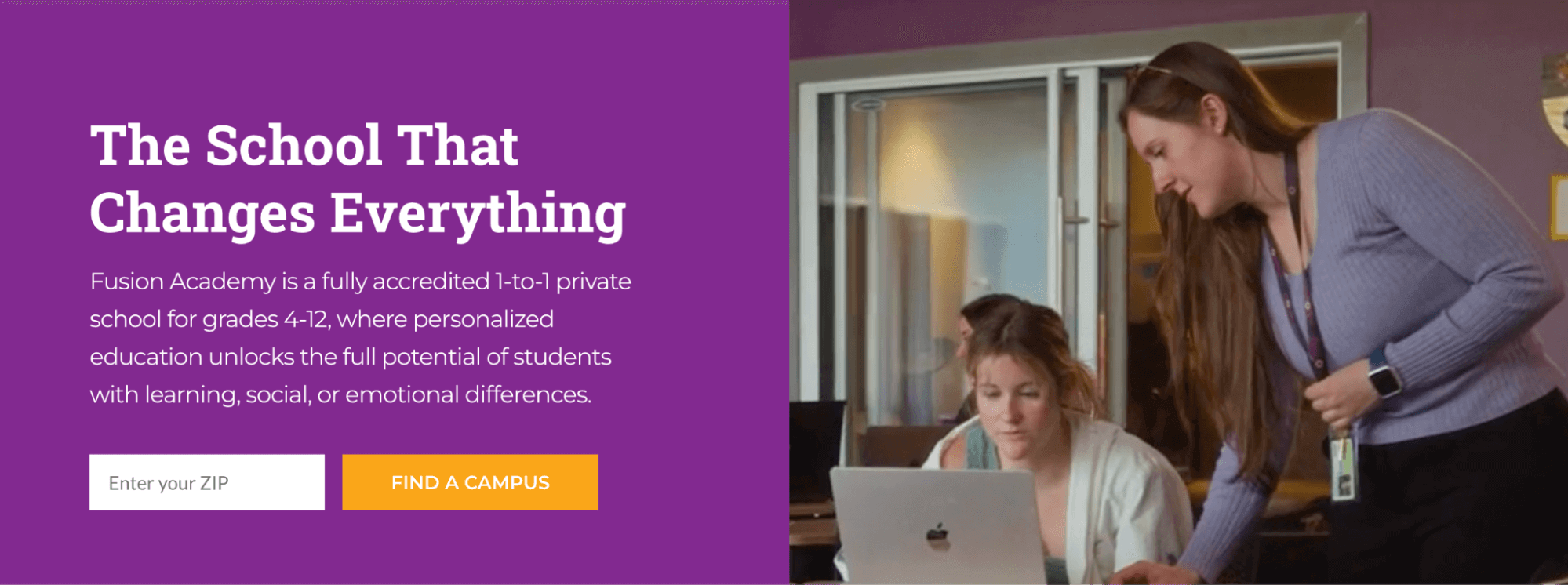
Fusion Academy is a private school for grades 4 through 12 with three campuses in Arizona: Gilbert, Pinnacle Peak, and Scottsdale.
At Fusion, every class is taught one-to-one (one teacher, one student) or in a small group of 2–5 students. That’s what sets Fusion apart from a traditional classroom and from a typical microschool, too.
Fusion’s model gives families some things a smaller microschool can’t:
- Personalization backed by real resources. We use the same individualized approach families love about microschools, paired with full accreditation, continuity from fourth through twelfth grade, and course depth most microschools don’t have the resources to offer.
- Teaching that adapts to the student. Fusion’s learning model can be adapted for many students with learning differences and gifted learners, so lessons are shaped around how a child actually learns.
- A real sense of community. Our campuses run regular events, open houses, and clubs led by our students’ interests.
- Flexible scheduling. Fusion campuses are open 7:30 AM to 7:30 PM, Monday through Friday, so families can build a schedule around their lives rather than the other way around. Some microschools operate with more limited hours, which makes this kind of flexibility harder to come by.
Let’s take a look at life at Fusion in more detail.
Personalized Learning that Goes Beyond a Typical Microschool
In a typical microschool, one teacher is often adapting lessons across several grade levels at once. At Fusion, small class sizes mean teachers can focus much more closely on where each student is and what they need next.
That starts before a student even sets foot in a classroom.
Enrollment begins with a conversation with the Head of School about the student’s goals, past school experiences, and reasons for looking into alternative educational options. We also use MAP® testing and a MindPrint cognitive assessment to build a picture of how the student processes information, including strengths and areas for support.
This combination of in-person meetings and standardized tests gives us a strong starting point for a student’s time at Fusion. It gives us a strong understanding of a student’s academic skills and their approach to problem solving, and a fuller picture of what they’re interested in and what they need to learn. This means that when a student starts, they already have an individualized curriculum in place, which we can then adapt further as their teachers get to know them and as their skills develop.
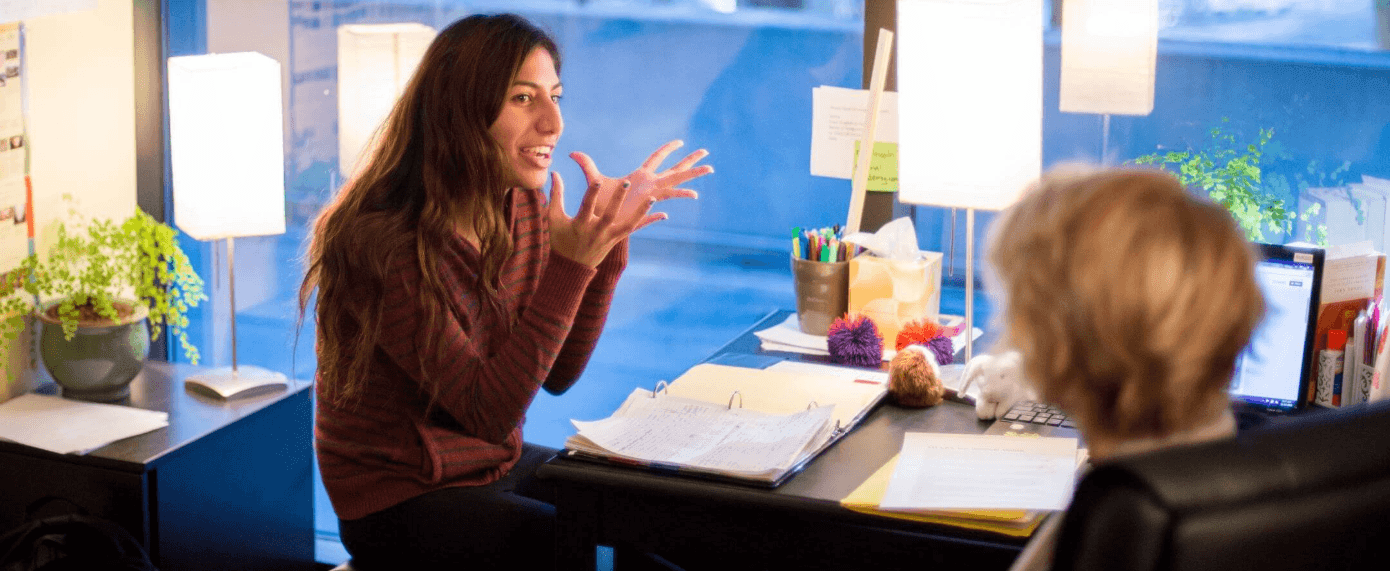
During lessons, our teachers use AI tools like Lexia, ALEKS, and MagicSchool to help keep material matched to each student’s level and interests. In math, for example, ALEKS adjusts problems to a student’s level, so their lessons are challenging but not discouraging. With MagicSchool, a teacher can generate materials like quizzes, assignments, and word problems to connect a skill a student needs to practice with a topic they’re genuinely interested in.
As a result, two students in the same subject might move at different paces and use different materials, a level of individual attention that’s hard to sustain even in a typical microschool.
Academic Depth a Microschool Can’t Replicate
Course variety is one of the bigger trade-offs parents make when they opt for a microschool model, since a single teacher can usually only teach what they know well. Fusion takes a different approach. We offer:
- 300+ courses across Essential, college preparatory, Honors, and AP® levels.
- Endorsements in specific subjects where a student has excelled, which appear on a student’s transcript and can help college applications stand out.
- Mix-and-match flexibility, so students can take Essential courses where they need more support and AP® or Honors where they excel, rather than being locked into one level across the board.
- Grades 4–12 continuity, so families don’t have to restart their school search when high school arrives, backed by dedicated post-secondary counseling.
And the results hold up. In Fusion’s Class of 2025:
- 99% of applicants were accepted to a four-year college
- 87.5% attended their first-choice college
- 41% received merit scholarships averaging $58,303
Support for Students with Learning Differences
A classic microschool isn’t the only option if the goal is for a student to get more individualized attention. Fusion’s one-to-one model offers many students with learning differences that same level of support. This includes students with ADHD, dyslexia, autism, anxiety, sensory processing disorder, twice-exceptional students, and more.
Because classes at Fusion are so small, our teachers can adjust their approach to each student’s individual learning needs without disrupting other members of the class. This includes:
- Using accommodations like flexible seating, noise-canceling headphones, and weighted blankets during lessons
- Switching to more hands-on materials to help students grasp new concepts and experience real-world learning
- Building short movement breaks into class as needed, or scheduling students time in the Homework Café to regroup after a challenging lesson
- Coaching students in executive function skills as part of their everyday schoolwork rather than as an afterthought
Campus Life in Arizona
A common worry when families consider leaving a more conventional school is whether their child will still build real friendships and socialize. It’s a fair question, and Fusion takes it seriously.

Much of Fusion’s community life happens in the Homework Café. There’s a Quiet Café for focused independent work, and a Social Homework Café for students who’d rather work alongside friends or have lunch together. Either way, students can leave campus with their assignments already done, so they can unwind in the evening.
The Social Homework Café doubles as a hub for clubs, including improv, board games, video games, and music, plus student-led clubs that change based on what students are interested in. We run regular events for families too, such as the education night events and Paint and Sip classes that Fusion Gilbert puts on throughout the semester.
Fusion also runs a Community Action Program with field trips, service projects, and local partnerships. For example, Fusion Scottsdale students recently teamed up with the Foster Alliance for a holiday toy drive.
Between the Homework Café, hands-on community programs, and student-led clubs, Fusion’s Arizona campuses offer something families don’t always expect from a small school: full accreditation, ESA eligibility, and real community, all in one place. Families who live far from a brick-and-mortar campus, or who’d benefit from a blended learning setup, can find the same community and individualized approach through Fusion Global Academy.
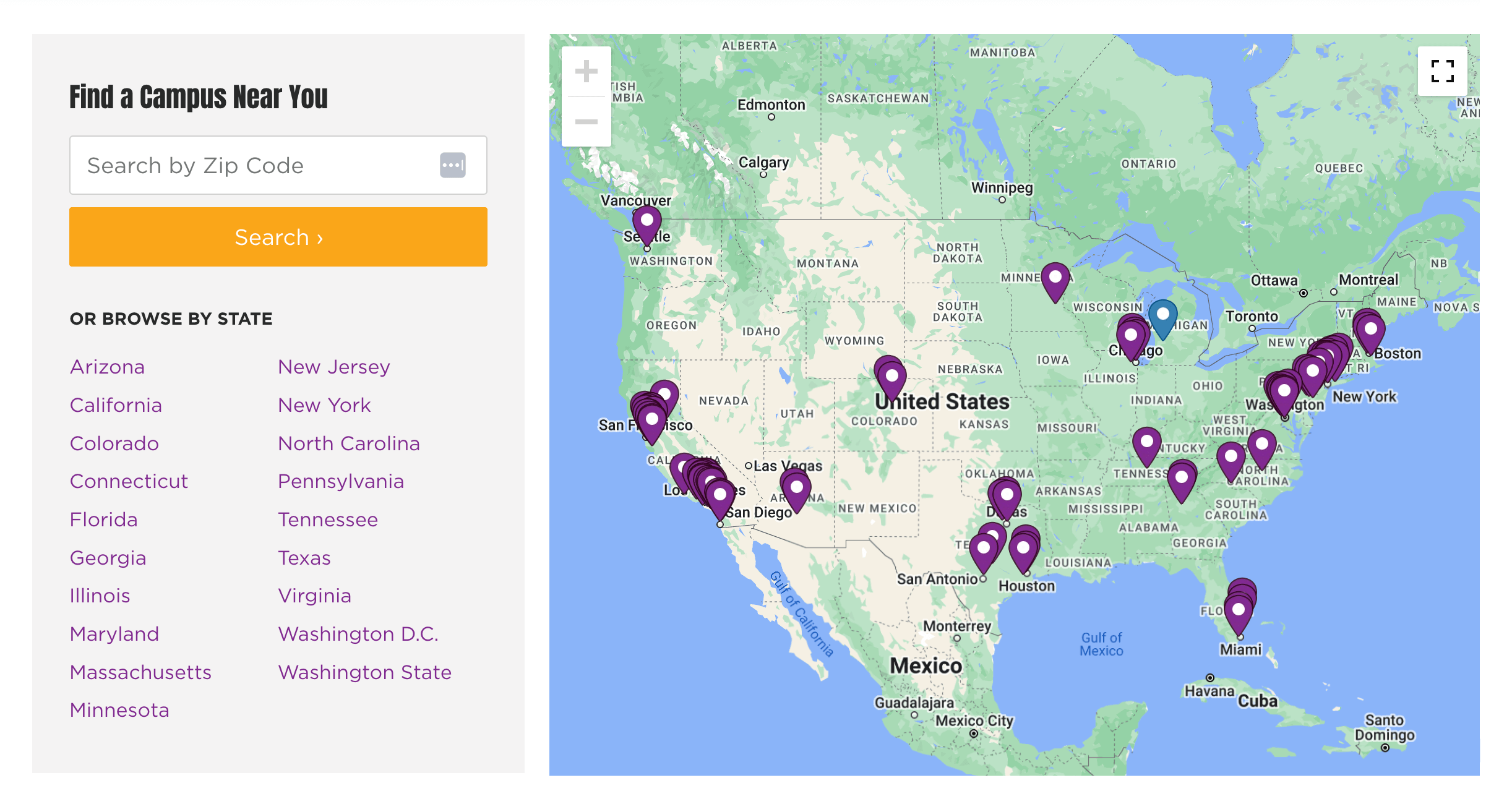
To learn more about Fusion Academy, contact your nearest Arizona campus:
| Fusion Academy Gilbert
400 E. Rivulon Boulevard Phone: 602-854-6677 |
Fusion Academy Pinnacle Peak
7669 E Pinnacle Peak Road Phone: 480-856-6650 |
| Fusion Academy Scottsdale
8700 N Gainey Center Drive Phone: 602-661-3721 |
More Microschool Options in Arizona
Arizona’s microschool scene covers a lot of ground, from schools built for gifted and twice-exceptional learners to STEAM-focused and project-based learning programs, to microschools designed specifically for neurodivergent students. Below, we’ll walk through some of the options worth knowing about, organized by city.
Microschools in Phoenix
The Gifted Collective: Gifted and Twice-Exceptional Microschool
The Gifted Collective serves grades 2–8 and also has a hybrid high school partnership with ASU. The school has 12–16 students in each of its small classes. It currently runs two distinct microschool options: One for traditionally gifted learners who benefit from a small, flexible environment, and one for twice-exceptional learners who need additional social-emotional support alongside academic challenge.
What makes this one worth a closer look is the founder’s background. Adam Laningham spent over two decades in public education before opening the school because he saw gifted and twice-exceptional kids getting overlooked in traditional classrooms. Based on this experience, the school leans on relationship-building and discussion, which can be a relief for parents whose kids have struggled with rigid behavior systems elsewhere.
- Address: 15255 N 40th St, Bldg 6 #147, Phoenix, AZ 85032
- Phone: 623-986-8408
The Modern Schoolhouse: STEAM-Focused Home-Based Microschool
The Modern Schoolhouse is a K–4 microschool in northwest Phoenix with a 10:1 student-teacher ratio.
The school blends a traditional one-teacher setup with modern classroom tech, including laptops, tablets, a Smartboard, and 3D printing, woven into a STEAM curriculum. For parents drawn to the intimacy of a true one-room schoolhouse who don’t want to sacrifice hands-on technology, that combination is hard to find elsewhere.
- Address: 3100 W Dynamite Blvd, Phoenix, AZ 85083
- Phone: 623-287-9024
Inspire Academy: Neurodiverse-Focused, Entrepreneurship-Minded Microschool
Inspire Academy serves grades K-12 in Sun City and Glendale. It runs as a hybrid model: families choose either a 3- or 4-day program, with a self-directed curriculum supported by Learning Coaches.
The program at Inspire Academy is specifically built for neurodiverse learners, bridging the gap between homeschool and a more structured school setting. What stands out is the entrepreneurship thread running through the curriculum. Alongside core academics, students get enrichment blocks in things like business fundamentals, which is a distinctive add for a school this size and gives the program a forward-looking feel.
- Address: 10147 W Grand Ave, Suite C1, Sun City, AZ 85351
- Phone: 626-264-2183
Microschools in Scottsdale
Copper Sky Academy: Microschool for Neurodiverse Learners
Copper Sky Academy is a K-8 microschool in Scottsdale built specifically for neurodiverse learners, including students with autism, ADHD, dyslexia, and twice-exceptional profiles. Instruction runs on a 1:1 and small-group basis.
What sets this school apart isn’t just the small classes; it’s the layering of therapeutic support directly into the school day. Copper Sky pairs academics with evidence-based interventions aimed at each student’s specific learning profile and rounds things out with community outings and specialized enrichment classes, so social skill-building happens alongside academics rather than as an afterthought.
- Address: 9735 N 90th Place, Suite 201, Scottsdale, AZ 85258
- Phone: 480-805-5051
Microschools in Tucson
Desert Dragon Learning Community: Neuroaffirming, Trauma-Informed Microschool
Desert Dragon Learning Community is a 501(c)(3) nonprofit microschool in Tucson serving grades 6–8, built specifically for neurodivergent students. The school doesn’t publish a set enrollment number or ratio, but keeps things intentionally small and flexible, with full-time, part-time, and half-time options.
Its nonprofit status is part of what makes it distinct in this list: rather than running as a private business, Desert Dragon operates as a mission-driven organization and describes its approach as neuroaffirming and trauma-informed, language you don’t see as often among Arizona microschools. This philosophy can make a real difference to families searching for a microschool option because their child has struggled elsewhere.
- Address: 3054 N. 1st Ave #1, Tucson, AZ 85719
- Contact: annie@desertdragonlearning.org
A Mind of Magic and Reason Learning Center: Interest-Led Microschool for Atypical Learners
A Mind of Magic and Reason (AMOMAR) is a brand-new microschool on Tucson’s Eastside, currently serving grades 3–8 and expanding to K–8. Enrollment details and a specific ratio aren’t published, though the school describes itself as multi-age and small by design.
What stands out here is the framing as much as the format. Students are called “Seekers” and teachers “Sages.” Lessons are built around student-led exploration rather than test prep, and the week includes an outing day at the library or a park instead of a fifth day in the classroom. Founder April Simmons, a former public school teacher, built the school explicitly for kids she describes as atypical learners: neurodivergent students, or those who simply need more time, movement, or challenge than a standard classroom allows. This makes the school a strong option for families drawn to a genuinely different philosophy of learning rather than just a smaller version of a traditional one.
- Address: 4141 E Irvington Rd, Bldg A, Tucson, AZ 85714
- Phone: Families connect through aninterest form
Microschools in Gilbert
Paradigm Learning Microschools: Personalized-Path K–8 Microschool
Paradigm Learning Microschools is a private K–8 microschool in Gilbert with a 5:1 student-to-teacher ratio. Enrollment is rolling, so families can join at any point in the year rather than waiting for a fixed start date.
The distinguishing feature here is how literally the school takes “personalized.” Rather than placing students on a single grade-level track, Paradigm builds each child a unique learning path based on their specific interests and preferences, aiming to help kids find personal meaning in what they’re studying rather than just moving through a standardized curriculum. For a family whose child has checked out of traditional school because nothing felt relevant to them, that level of customization is the main selling point.
- Address: 1166 S. Gilbert Rd, Ste. 108, Gilbert, AZ 85296
- Phone: 602-804-3393
ReThink Microschools: NeuroEmpowered Microschool for Grades 5-12
ReThink Microschools serves kindergarten through 12th grade in Gilbert, with classes capped at eight students. The school is built specifically around neurodivergent learners.
Two things make this one worth flagging separately from the other neurodiverse-focused schools on this list. First, ReThink integrates speech-language pathology directly into the curriculum rather than treating it as an outside referral. Second, the school partners with Arizona State University, giving high schoolers a path to earn college credit before they graduate. The school also places a very strong emphasis on family involvement as key to student success.
- Address: 331 S Cooper Road,Gilbert, AZ 85233
- Phone: 480-508-0781
Moreana Boys Academy: All-Boys Hybrid Learning Center
Moreana Boys Academy is a Christian, boys-only learning center in Gilbert serving upper elementary through high school-age students. It isn’t a traditional school in the formal sense: it doesn’t issue grades or diplomas, and families remain responsible for choosing and directing their son’s core curriculum, with Moreana providing the coaching, structure, and accountability around it.
What makes this option different from the other schools on this list is the format. Every Friday, students head out on excursions across the Phoenix area (think welding, Brazilian jiu-jitsu, bushcraft, rock climbing). Mixed-age enrollment means older boys naturally mentor younger ones, and founder Tom Dowell, a former public school teacher, works directly with students in a small-group setting.
- Address: 1075 E Riggs Rd, Ste 4, Chandler, AZ 85249
- Phone: 480-431-8410
How to Evaluate Microschools Near You
Once you’ve got a shortlist of microschools that seem like a good fit, it helps to ask the same set of questions across each one.
Here’s what’s worth digging into before you enroll.
Credentials and Accreditation
- What formal teaching qualifications do staff hold? Some microschools are led by certified teachers; others are run by parents or specialists without a formal teaching background. Neither is automatically better, but it’s worth knowing which you’re getting.
- Do any teachers hold specialist credentials for learning differences, such as Orton-Gillingham training or special education certification? This matters most if your child has a diagnosed learning difference and needs more than general small-group attention.
- Is the school accredited, and through which body? As we covered earlier, this affects whether credits transfer and whether the school qualifies for funding.
- Is the school registered as an approved ESA provider in Arizona? Not every microschool qualifies, so it’s worth confirming this directly rather than assuming.
Day-to-Day Experience
- What does a typical school day look like? Schedules, group sizes, and the balance between structured lessons and independent work vary a lot between microschools, so it’s worth asking for specifics.
- What curriculum does the school use, and how was it chosen? Some schools follow a set curriculum; others build one around each student or leave curriculum choices to the family.
- Does the school have subject specialists for high school-level courses? This is especially relevant if your child will need more advanced coursework as they get older.
- What is the student-to-teacher ratio, and how many students are in a typical class? A smaller number isn’t always better if it means one teacher is covering multiple subjects and grade levels at once, so it’s worth asking how that ratio actually plays out day to day.
Academic Tracking and Communication
- strong>How is academic progress tracked and measured? Some microschools use formal assessments and progress reports, while others rely more on teacher observation and family check-ins.
- How often, and in what format, do parents receive updates? Consistent communication can make a big difference, especially if you’re used to a more hands-off traditional school experience.
- What happens if a student falls behind? It’s worth understanding whether the school has a clear plan for catching a student up, or whether that responsibility falls mostly on the family.
Support for Learning Differences
- Can the school accommodate an IEP or 504 plan? Not all microschools are equipped to formally support these plans, even if they’re generally welcoming to students with learning differences.
- Are specialist services like speech or occupational therapy available on-site, or referred out? This affects how many separate appointments and providers a family needs to coordinate.
- What grade range does the school cover, and what’s the transition plan when a student ages out? Since many microschools stop at 8th grade, it’s worth asking this early, even if graduation feels far off.
Using Arizona’s ESA Program for Microschool Tuition
If you’re weighing the cost of microschool tuition, Arizona’s Empowerment Scholarship Account (ESA) program is worth understanding before you enroll. An ESA allows families to redirect a portion of the funding the state would otherwise spend on their child’s public education toward private schooling instead, and it’s open to every Arizona family regardless of income.
Most families receive somewhere between $6,000 and $9,000 per child each year, which covers a meaningful chunk of private tuition. Students with disabilities can qualify for significantly more, in some cases up to $43,000 annually, depending on their level of need. Funds can go toward tuition, but also things like tutoring, textbooks, technology, school uniform, and even transportation to and from school, which can help offset the full cost of a microschool experience.
Applying is straightforward: You’ll set up an account through the state’s ESA portal, provide proof of Arizona residency and your child’s birth certificate, and (if relevant) documentation of an IEP or 504 plan.
One thing worth double-checking before you enroll: not every microschool is an approved ESA vendor. Fusion Academy is ESA-approved at all three of its Arizona campuses, but ESA eligibility varies from school to school among the other options covered here, so it’s worth confirming directly with each one before assuming your funds will cover it.
Find the Right Arizona Microschool for Your Family
Arizona offers many different microschool options, and the right fit depends on what your child needs most.
If you want that same personalized, close-knit experience with the added structure, accreditation, and academic depth to carry your child through graduation, Fusion Academy’s Scottsdale, Gilbert, and Pinnacle Peak campuses are worth exploring. To learn more, you can: