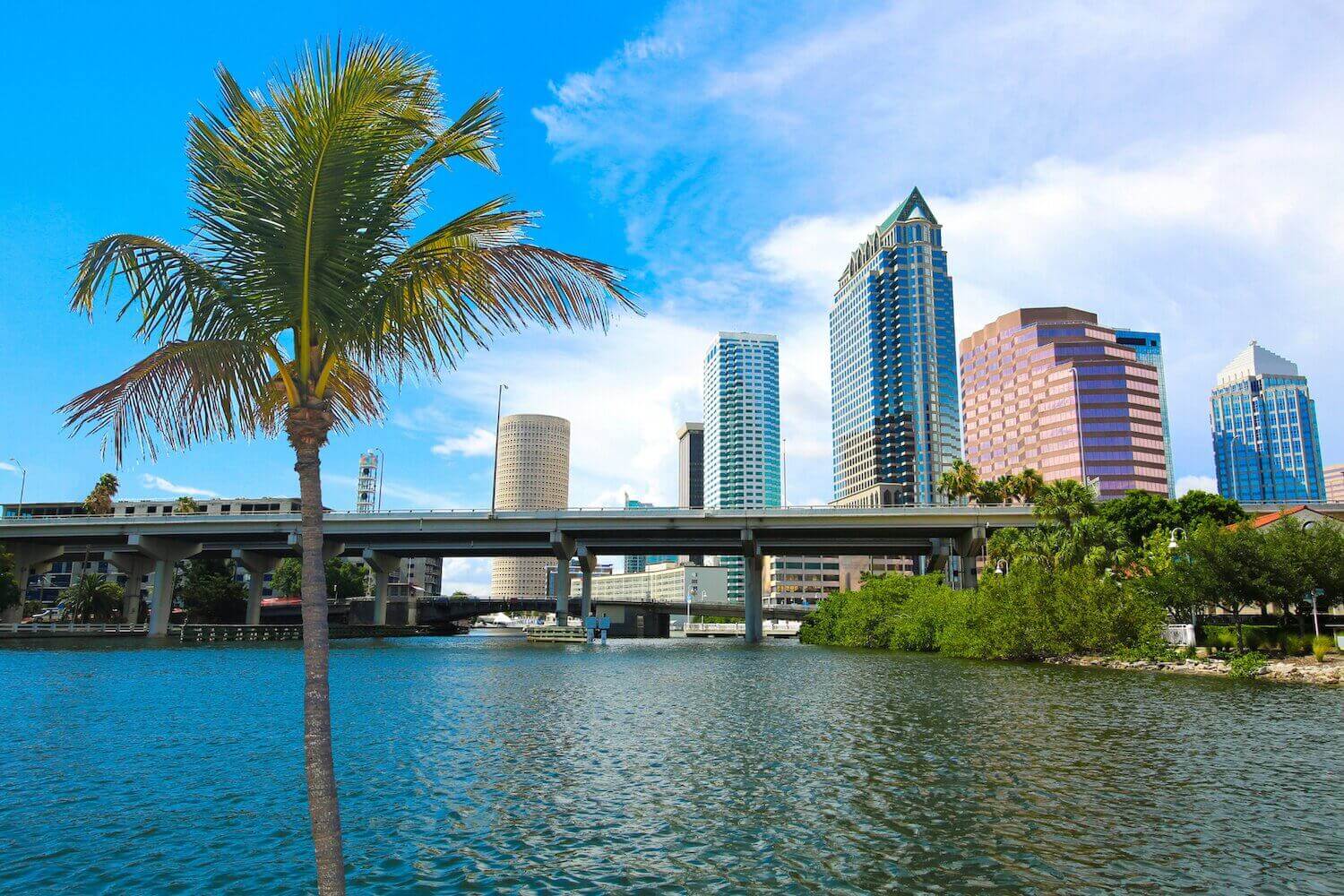


Florida has many different schools for students with autism, from tuition-free charter schools to private specialized programs. On the surface, lots of these schools promise the same ideas, including smaller class sizes, individualized instruction, and therapeutic support. But there are key differences between them, and the right school for your child will depend on their specific needs, learning style, and goals.
To help you find the right fit, this post covers a selection of schools across Florida, starting with our own school, Fusion Academy.
Fusion Academy is a private school for grades 4–12 offering personalized, one-to-one instruction. We have more than 80 campuses throughout the US, with six campuses in Florida (at the time of writing): Boca Raton, Miami, Orlando, Palm Beach Gardens, Pembroke Pines, and Tampa. Fusion can be a strong fit for students with high-functioning autism who are academically capable but benefit from more flexible teaching methods, adjusted pacing, and strong social and emotional support. Find out more here.
Before we get to the list, we’ll also walk through some of the areas that can help you compare and evaluate the schools near you, including:
- The level of support your child needs
- Student-to-teacher ratio and classroom structure
- Academic approach and potential pathways for life after high school
- Funding options, including Florida’s FES-UA and FES-EO scholarships
- Social-emotional support and school community
But first, we’ll look at why your child’s profile — their strengths, challenges, and the way autism shows up for them specifically — matters more than school type when it comes to finding the right fit.
Why Individual Needs Matter More Than School Type
Dr. Damon Korb, a developmental pediatrician and guest on Fusion’s Learning Differently podcast, explains that autism isn’t just a set of behaviors like restricted interests, lack of flexibility, and difficulty interpreting social cues. It is, fundamentally, a difference in the way the brain is wired. No two students with autism are the same, and students who have the same diagnosis on paper can need varying levels of academic, social, emotional, and functional support in different areas and at different times.
As Dr. Korb says:
“The term we use is ‘Autism Spectrum Disorder,’ and knowing it’s a spectrum is really important … There’s a whole range of abilities … all occur in varying degrees in each child, so they’re all very different. I really want parents to know that it’s a spectrum, and that we can’t predict the future, and that early intervention makes a big difference.”
Listen to the full episode here: Learning Differently: Autism: How to support communication, social, and sensory challenges.
Choosing the right school for autistic students can be complicated because autism often co-occurs with other learning differences. Some students with autism also have ADHD or dyslexia, or experience high levels of anxiety, and this can have as great an impact on their school experience as autism. A twice-exceptional (2E) student who is both autistic and academically gifted has very different needs from a student who requires intensive behavioral support, even if they technically share the same diagnosis.
While some children are identified with autism as toddlers, others, particularly girls, may not be evaluated until they begin to struggle in school. As Dr. Korb notes, autistic girls are often better able to mask their challenges by mimicking social behaviors or staying quiet to fit in:
“Depending on your presentation, girls more frequently than boys are identified later in life … the environment plus just the way girls are wired — it often masks and hides and doesn’t show up until later.”
And when a diagnosis comes later, it can shape the kind of support a student needs not just academically, but in understanding themselves, building confidence, and finding their place in a school.
With that in mind, this is a general guide to what type of school environment tends to work best for autistic students at each level of the spectrum:
- Students with level 1 autism may need some additional support, particularly around social situations and sensory processing. They can often do well in schools with small class sizes and teachers experienced with neurodivergent learners. A small-group private school teaching model can make a big difference to these students, as it gives teachers more room to adapt to the student and their needs.
- Students with level 2 autism need more frequent support or have delays in verbal or non-verbal communication. These students typically benefit from a much lower student-to-teacher ratio and integrated therapeutic services. Schools that combine academic instruction with speech-language support or behavioral intervention (rather than the student attending therapy appointments with their family after school) can often work well.
- Students with level 3 autism need substantial support and have significant impairments in daily functioning. These students usually require a dedicated autism school with trained specialists, small class sizes, ABA-based intervention, and structured transition programs for older teens. The number of schools that can meet these needs is smaller, and they tend to be concentrated in larger cities.
- Twice-exceptional students, who are both autistic and academically advanced, are often poorly served by schools that focus primarily on functional skills or behavior management. They need a setting that takes their intellectual abilities seriously while still accommodating their sensory, social, and executive function needs.
However, as we’ve seen, the diagnosis doesn’t always predict what a student will be capable of academically or the areas in which they’ll need the most support.
Take Viraj, for example. Viraj was a non-speaking autistic student who graduated from Fusion Academy Newton in 2024. In his previous schools, he had been steered away from academic work because of his communication challenges. With the right assistive technology that he was able to bring to Fusion, he showed he could engage with complex material and express sophisticated ideas. He went on to be accepted into MIT. (Read more about Viraj’s story.)
The best school for your child is the one that starts with who they are as an individual — and, in Dr. Korb’s experience, this school is the one where the child feels understood. The people best placed to make that call are the ones who know your child: you, their therapists, their current teachers, and of course the child themselves. With that in mind, let’s look at a framework of questions for evaluating your school options.
Questions to Ask When Evaluating Schools for Your Child
As a starting point, here are some of the most important things to find out before committing to a school:
- What level of support can the school provide? Ask specifically about IEP and 504 plan accommodations and how those are implemented day-to-day. Ask how accommodations are considered, how progress is tracked, and what happens when a plan needs to be reviewed and updated.
- What does the academic program look like, and where do most students go after graduation? For some families, a college-prep track is the priority. For others, vocational training and transition support matter more. Ask to see the course catalog, look at graduation outcomes to get a realistic sense of where the school’s program is designed to take students, and find out whether the school offers alternative graduation tracks. In some states, students with an IEP may be eligible for a modified diploma pathway, and it’s worth knowing early on whether a school can support that option if it becomes relevant for your child. (Learn more about Florida high school graduation requirements.)
- What is the student-to-teacher ratio, and how are classes structured? A low ratio on paper doesn’t always mean meaningful one-to-one time in practice. A class of eight students still leaves little room for the kind of individual attention that many autistic students need. Ask how much time a student typically spends working directly with a teacher or teaching assistant versus working independently or in a group.
- How does the school adapt to individual sensory and learning needs? Look for concrete examples. Can students dim the lights or use fidget toys during class? Is there a quiet space available if the day becomes overwhelming?
- What funding is available, and is the school an approved provider? Florida’s FES-UA and FES-EO scholarships can significantly offset the cost of private tuition for eligible families. Before ruling a school out because of the cost, find out whether it’s an approved provider under these programs and what the application process looks like. Your child’s current school district may also be able to contribute toward the cost of a specialized placement if it’s written into their IEP.
- Where is the school, and does the format work for your family? In-person, online, and hybrid options each have benefits and trade-offs. A school that looks ideal on paper may not be practical if the commute adds significant stress to the start of the day, or if the schedule doesn’t fit around your family’s other commitments. If an online or hybrid option is on the table, make sure you understand exactly what at-home days involve and whether your child would have teacher support or be expected to work independently.
- How does the school support students socially and personally? Academic progress matters, but so does whether your child feels they belong. Ask about structured social opportunities, how staff help students build peer connections, and what the school does when a student is struggling socially or emotionally. For autistic students especially, a school that takes the social and emotional side of school life seriously can make them feel much more settled and confident day to day.
Best Autism Schools in Florida
With those questions in mind, here is a selection of schools across Florida that are worth considering for students with autism, starting with Fusion Academy.
1. Fusion Academy: A Personalized Private School for Students with Autism in Florida
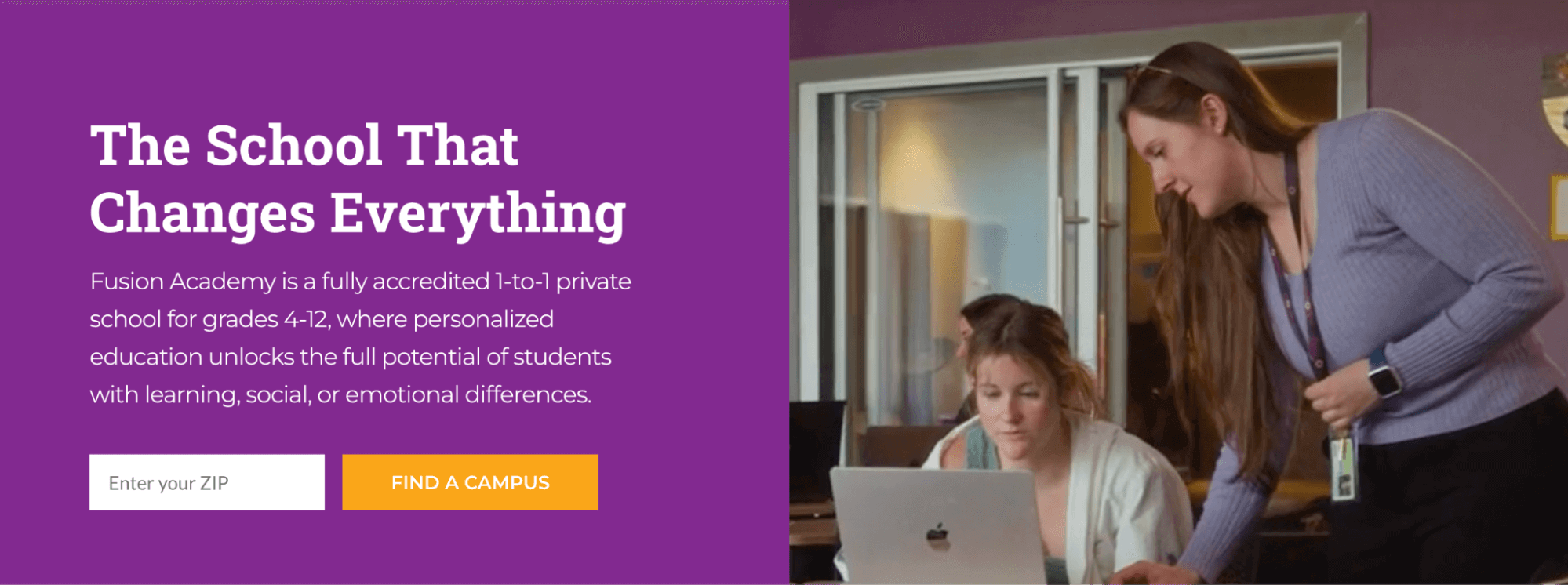
Fusion Academy is a fully accredited private school for grades 4–12 with six campuses across Florida in Boca Raton, Miami, Orlando, Palm Beach Gardens, Pembroke Pines, and Tampa. Classes are available in person, online through Fusion Global Academy, and as a hybrid of both — an option some students with autism use to reduce the sensory demands of a full school day.
We offer a one-to-one or small-group learning model and a close-knit campus community where students can excel personally and academically. In our experience, this approach works particularly well for students with high-functioning autism (sometimes referred to as students with low-support needs), who haven’t found their place in a traditional school environment, or whose academic abilities haven’t been recognized because previous schools focused primarily on their support needs.
How Fusion Academy Provides Individualized Learning for Students with Autism
Fusion’s smaller class sizes give teachers the room to make adjustments that simply aren’t possible in a traditional classroom.
Classes at Fusion are taught either one-to-one (one teacher, one student, for the whole class) or in very small groups of 2-5 students. This means teachers get to know each student’s learning needs, preferences, and interests well, and they can even adapt their teaching approach to the kind of day their student is having. Over time, that consistency and responsiveness build trust that helps students feel genuinely comfortable in school.
For example:
- If a student processes new concepts better when they can preview vocabulary before a lesson, or needs concrete examples before abstract principles, the teacher can build that into every session with that student.
- If a student has sensory processing challenges, teachers can adjust the physical environment to reduce sensory load or give the student the additional sensory input they need to come to rest and focus fully.
- If a student has anxiety about a certain type of test or assignment, teachers can offer different versions of an assessment or break an assignment into stages, giving students the chance to show what they actually know.
- If a student needs a free period to decompress after a demanding class, or does their best work later in the day, their schedule can be built around that from the start.
We start the process of putting these accommodations in place when a prospective student and their family first meet with the head of their chosen school.
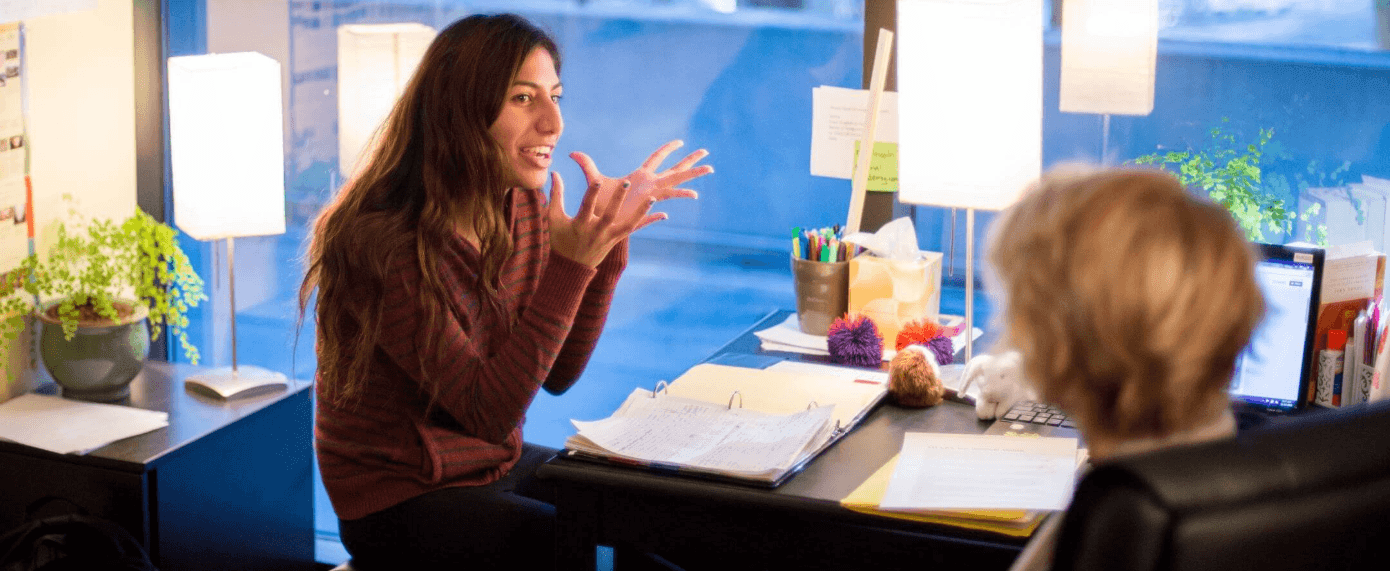
Beyond academic adjustments, Fusion teachers also act as mentors. Many students with autism benefit from explicit support with executive function, particularly around the kind of day-to-day regulation that becomes harder when routines change unexpectedly. Teachers can work with students on preparing for transitions, managing the anxiety that comes with a change to the plan or schedule, and building strategies they can rely on when things don’t go as expected.
Campus Life for Students with Autism at Fusion
Fusion’s Florida campuses are small by design, typically maxing out at around 100 students. For students with autism, a smaller campus can make a significant difference, as it keeps the environment more predictable, less overstimulating, and makes it easier for students to find their place in the community.
Campus life at Fusion is built around a few core elements:
- The Homework Café: Every student has scheduled time in the Homework Café. There’s both a Quiet Homework Café, which offers students a calm space where they can work on assignments and get support from teachers, and a Social Homework Café where students can eat lunch, connect with their peers, and have a teacher on hand to help facilitate those interactions.
- Student clubs: Clubs vary by campus because they’re inspired by students’ interests, but there’s always a range of options for students to explore. For example, at the Pembroke Pines campus, there has been a Gaming Club, a Fishing Club, a Chess Club, a Dance Club, and a Journaling Club. Teachers supervise and participate in these meetups to ensure everyone who wants to can get involved.
- Social events and field trips: Each of our campuses runs regular excursions and activities, giving students the opportunity to learn at local museums and cultural centers, try out new sports, or get creative.
- Community Action Program (CAP): Throughout the academic year, Fusion students take part in community service and volunteering as part of our wider focus on becoming engaged members of their community.
To give just a few examples, students at Fusion Academy Miami recently organized a food drive to support local families in need and held their own Art Showcase to celebrate the young artists in their school community. Meanwhile, Fusion Boca Raton organized an open mic night, ran a student-teacher ping-pong tournament, and assembled gift bags for the SOS Children’s Villages Florida.

Parents of students with autism often tell us they’re used to only hearing from school when something has gone wrong. At Fusion, teachers provide regular feedback on how each student is doing in terms of their academic results, how they’re engaging with the material, and how they’re coping with campus life overall. For families of neurodiverse students, that kind of transparency can be extremely reassuring.
The data reflects this. 84% of students are proud of the progress they’re making towards their educational goals, and 88% of parents agree that their child is more successful at Fusion compared to their previous school. (See more student and parent data here.)
Academic Programs at Fusion’s Florida Campuses
Fusion’s Florida campuses offer a range of enrollment options, so families can find a format that fits their child’s needs and goals:
- Full-time middle and high school programs offer a complete academic program taught one-to-one or in small groups, with a wide range of course types including Honors and AP® courses. View our full catalog of over 300 courses for grades 4–12 here. It’s worth noting that, alongside traditional subjects, we also offer specific modules that cover themes like executive function and study skills, life management skills, wellness, and specialist topics in STEM and the creative arts.
- Classes for credit offer individual classes for students who want to make up credits, get ahead in a subject, or pursue a specific interest while remaining enrolled at their current school.
- Tutoring and mentoringprograms offer flexible support packages for students who need help in specific subject areas or want to build their academic confidence.
For families thinking ahead to college, our post-secondary counseling program supports students with college applications and planning for life after high school. From the class of 2025:
- 99% of applicants were accepted into a 4-year college
- 87.5% attended their first-choice school
- 51% received merit scholarships averaging $58,303
Using Florida’s FES Funding at Fusion
Florida offers two scholarship programs that can help offset the cost of private school tuition for eligible families: the FES-UA (Family Empowerment Scholarship for Students with Unique Abilities) and the FES-EO (Family Empowerment Scholarship for Educational Options). Both work similarly to an education savings account or school voucher, allowing families to apply state education funds toward tuition fees in approved schools, or to the other expenses associated with attending a private school.
Students with diagnosed learning differences or disabilities are often eligible for the FES-UA program, and this can entitle them to a higher level of funding than the base amount of ~$8,000 available through the FES-EO.
Fusion Academy is an approved provider under both programs, and families can use FES scholarship funds toward tuition at any of Fusion’s Florida campuses.
Find out more about applying for an FES scholarship here: Florida ESA Program: What’s Available, Who’s Eligible, and Where to Use the Funding
Next Steps
If you’d like to find out more about Fusion Academy and whether it could be a good fit for your child, here’s how to get in touch:
| Fusion Academy Boca Raton
5050 Conference Way N Phone: 561-953-9365 |
Fusion Academy Miami
9130 S Dadeland Blvd. Phone: 305-831-0041 |
| Fusion Academy Orlando
2221 N Orange Blossom Trail Phone: 321-524-3104 |
Fusion Academy Palm Beach Gardens
11300 Legacy Avenue Phone: 561-766-4096 |
| Fusion Academy Pembroke Pines
880 Southwest 145th Ave Phone: 754-223-1228 |
Fusion Academy Tampa
2909 W Bay to Bay Blvd Phone: 813-358-4628 |
You can also request more information from your nearest head of school here.
And if you’re not based near one of our Florida campuses, or if a hybrid option would work better for your child, Fusion Global Academy offers our same flexible, one-to-one or small-group learning model fully online.
Next, we’ll look at more autism schools in Florida, as broken down by region.
Autism Schools in Miami and South Florida
2. South Florida Autism Charter School
South Florida Autism Charter School is a tuition-free public charter school serving students with autism in kindergarten through 12th grade (up to age 22) across Miami-Dade and Broward Counties, with its main campus in Hialeah. It’s a good fit for families looking for a structured, ABA-based program without the cost of private tuition, particularly for students who need support with communication and daily living skills.
Classrooms at SFACS are small, with no more than nine students per class and a 3:1 student-to-teacher ratio, supported by one state-certified special education teacher and two teacher assistants. All teachers and teacher assistants are trained in Applied Behavior Analysis, and a Board Certified Behavior Analyst is on staff to manage individual programs and consult with staff. For students with communication challenges, the school offers augmentative and alternative communication support across a range of methods.
- Address: 3751 W 108th St, Hialeah, FL 33018
- Phone: 305-823-2700
3. Atlantis Academy Miami
Atlantis Academy Miami is a private K–12 school in Miami serving students with a wide range of learning differences, including autism, ADHD, and dyslexia, established in 1976. It’s a good fit for students with mild to moderate learning differences who need a small, structured, and supportive environment with individualized instruction. For older students and young adults, the school also offers the L.I.F.E. Program (Living Independently with Fundamental Experiences), a post-secondary track focused on independent living and vocational skills for students aged 18 and over with autism and related disabilities.
Many of Atlantis Academy’s teachers have 25 or more years of experience working with students with learning differences, and the Miami campus features outdoor spaces, a tennis court, and a softball field alongside dedicated areas where older students can develop practical life skills like cooking and managing household tasks. Atlantis Academy also has campuses in Coral Springs and West Palm Beach, serving students across South Florida.
- Address: 10855 SW 72nd Street, Suite 49, Miami, FL 33173
- Phone: 305-456-9578
4. South Florida School of Excellence
South Florida School of Excellence is a private PreK–12 clinical and academic school in Opa-locka serving students in general education and special education with an autism-specific program. It’s a good fit for families looking for a school that brings academic instruction and therapeutic support under one roof, particularly for students who would otherwise need to coordinate multiple providers outside of school hours.
SFSE describes itself as the only school in South Florida offering a fully integrated clinical and academic model, with on-site therapies including ABA, speech and language, occupational therapy, social skills training, daily living skills, and vocational preparation all available within the school setting. The campus is located in the Opa-locka City Hall building and is accessible from Miami, Fort Lauderdale, and surrounding areas.
- Address: 780 Fisherman Street, 2nd and 3rd Floor, Opa-locka, FL 33054
- Phone: 754-502-3901 ext. 300
5. Center Academy
Center Academy is a fully accredited, family-operated private school serving students in grades 4–12 with learning differences, including ADHD, autism spectrum disorder, and dyslexia, with a South Florida campus in Coral Springs. It’s a good fit for students who need a structured, college-preparatory environment with small class sizes and individualized instruction, and who would benefit from teachers experienced in neuropsychology and learning differences.
Center Academy develops an individualized program for each student based on their abilities, learning style, and academic level, with flexibility to offer classroom, small group, and one-to-one instruction. The school accepts several Florida scholarship programs, including FES-UA and FES-EO. Center Academy also has campuses across Central and North Florida, including locations in Orlando, Jacksonville, Tampa Bay, and the Gulf Coast.
- Address: 4700 Riverside Drive, Suite 100, Coral Springs, FL 33067
- Phone: 954-575-1231
Autism Schools in Orlando and Central Florida
6. Arbor School of Central Florida
Arbor School of Central Florida is a nonprofit private school in Winter Springs serving students with disabilities ages 5–22, with a curriculum built around sensory integration, language development, and academic achievement.
Arbor School provides small group and one-to-one instruction alongside on-site speech, occupational, music, and art therapy, so students don’t need to travel to separate providers for support. The school also offers workforce training and on-the-job experience for older students, helping prepare them for life and employment after graduation.
- Address: 1010 Spring Villas Point, Winter Springs, FL 32708
- Phone: 407-388-1808
7. The Dream Academy
The Dream Academy is a therapeutic private school in Clermont serving students in kindergarten through 12th grade with high-functioning autism, ADHD, and other learning differences. It’s a good fit for families looking for a school that takes a whole-child approach, integrating academic subjects with enrichment areas like music, the arts, and physical education alongside therapeutic support.
The Dream Academy uses theme-based units and targeted learning activities designed to meet students at their developmental stage and help them build the skills and confidence they’ll need after graduation.
- Address: 2400 S Hwy 27, Suite 4111, Clermont, FL 34711
- Phone: 352-556-8352
8. Alpine Academy
Alpine Academy is a private school in Oviedo serving students from kindergarten through 12th grade with autism, ADHD, and other learning differences, using an ABA-based approach integrated with evidence-based academic instruction. It’s a good fit for students across a range of needs, with separate program tracks for students who need intensive language and learning support and for those who are ready for a more socially and academically focused program.
Alpine Academy has a student-to-teacher ratio of around 8:1, with certified behavior analysts on staff alongside qualified teachers to ensure both academic and behavioral goals are being actively monitored and worked toward. The school also offers tele-services for students who are unable to attend in person, and accepts Florida scholarship programs to help offset tuition costs.
- Address: 848 Executive Drive, Oviedo, FL 32765
- Phone: 407-678-8889
Autism Schools in Tampa Bay
9. LiFT Academy
LiFT Academy is a private autism-specific school in Clearwater serving students across the Tampa Bay area, with a program designed to support academic growth, independence, and self-advocacy alongside practical life and vocational skills. It’s a good fit for families whose child needs a school that takes both academic achievement and preparation for life beyond the classroom seriously, with a team that includes behavior analysts, speech-language pathologists, and occupational therapists working together around each student.
LiFT Academy’s facilities are designed specifically around the needs of students with autism, with sensory-friendly classrooms, technology-equipped learning spaces, and outdoor areas for recreation. The school’s focus on vocational training and employment pathways means that many graduates have gone on to pursue careers, attend college, and become active members of their communities.
- Address: 1005 S. Highland Avenue, Clearwater, FL 33756
- Phone: 727-258-7659
10. Autism Inspired Academy
Autism Inspired Academy is a nonprofit K–12 school in Clearwater serving autistic students across a range of abilities, with a relationship-centered approach that combines individualized academics, daily social learning, and life skills practice in a calm, sensory-aware environment.
AIA offers two program pathways: one for students working toward a standard high school diploma, and one focused on workforce skills and practical independence. A standout feature of the campus is its Inspired Farming program, where students tend a working farm (including a chicken flock and a conservation garden developed in partnership with Tampa Bay Watch) as part of their hands-on learning. Students also run Shark Bites Café, a student-operated café that builds real-world workplace routines and career readiness skills.
- Address: 11225 US Highway 19 N, Clearwater, FL 33764
- Phone: 727-474-7711
Autism Schools in Palm Beach and the Treasure Coast
11. Palm Beach School for Autism
Palm Beach School for Autism is a tuition-free public charter school in Lake Worth serving students with autism spectrum disorder from preschool through 12th grade, up to age 21. It’s a good fit for families in Palm Beach County looking for an autism-specific, ABA-based school without the cost of private tuition, particularly for students whose IEP lists autism spectrum disorder as their primary eligibility.
The school serves over 370 students with a student-to-teacher ratio of around 8:1, and classroom programs are designed around each student’s individual behavioral profile, with a focus on overcoming specific challenges while building on strengths. On-site therapies and services are available to support students across academic and daily living goals.
- Address: 8480 Lantana Road, Lake Worth, FL 33467
- Phone: 561-533-9917
12. Oakstone Academy Palm Beach
Oakstone Academy Palm Beach is a private nonprofit school in West Palm Beach serving students from elementary through high school in a fully inclusive setting, where students with autism spectrum disorder learn alongside neurotypical peers. It’s a good fit for autistic students who are academically capable and would benefit from the academic rigor of a traditional school program in a small, supportive environment.
Founded in 2011 using a research-based Social Immersion model developed by the Children’s Center for Developmental Enrichment, Oakstone is built on the principle that inclusion benefits all students: those with ASD gain peer models and natural social opportunities, while neurotypical students develop leadership, empathy, and a broader sense of community. The school offers a competitive, college preparatory curriculum alongside arts, music, and athletics.
- Address: 345 South Military Trail, West Palm Beach, FL 33415
- Phone: 561-585-7800
13. Treasure Coast School for Autism
Treasure Coast School for Autism is a new autism-specific charter school in Port St. Lucie, developed with support from St. Lucie Public School District and modeled on the established program at Palm Beach School for Autism. It opened in August 2025, starting with preschool through grade 2, with additional grade levels being added each year, making it a tuition-free option to watch for families in St. Lucie County with younger children.
Because the school is still in its early stages, families should contact the school directly for the most current information on available grade levels, enrollment criteria, and program details.
- Address: 4291 SW Darwin Blvd, Port St. Lucie, FL 34953
- Phone: 561-533-9917
14. Treasure Coast Autism Project
Treasure Coast Autism Project is a private nonprofit school in Stuart serving students with autism spectrum disorder from kindergarten through high school, founded in 2011 by a group of parents and professionals in Martin County. It’s a good fit for students who need a structured, autism-specific classroom environment but are ready to learn in a more traditional environment for some parts of the school day. The level of integration is tailored to each student’s strengths.
Students at TCAP spend most of their day in small, specialized classrooms but mainstream out for activities like lunch, recess, and elective subjects. When a student shows particular strength in a core subject, they have the opportunity to attend that class with their neurotypical peers. The school also takes students into the community each month to build social and vocational skills in real-world settings.
- Address: 777 SE Salerno Road, Stuart, FL 34997
- Phone: 772-284-1391
Autism Schools in Jacksonville and Northeast Florida
15. North Florida School of Special Education
North Florida School of Special Education is a fully accredited private nonprofit school in Jacksonville serving students ages 6–22 with intellectual and developmental differences, including autism. It’s a good fit for students who need a school that goes beyond academics, combining individualized instruction with on-campus therapeutic programs and meaningful real-world experiences.
NFSSE is particularly well known for the range and depth of its campus programs. Berry Good Farms is an on-site urban farm where students learn organic growing and culinary arts as part of vocational training. Art with Soul supports students in pursuing creative careers in the visual arts. The campus is also home to the Delores Barr Weaver Therapeutic Equestrian Center, which serves both NFSSE students and the broader Northeast Florida community.
- Address: 223 Mill Creek Road, Jacksonville, FL 32211
- Phone: 904-724-8323
16. The Broach School
The Broach School is a private K–12 school with multiple campuses across the Jacksonville area serving students with autism, ADHD, dyslexia, anxiety, and other learning differences. It’s a good fit for families looking for a school with a long track record, small class sizes, and a flexible range of program options that can be matched to each student’s individual profile and goals.
The school offers several program tracks, including a traditional academic program, a Foundations program designed specifically for students with autism and developmental disabilities, and a Transition program for older students preparing for independent adult life. A notable feature is the school’s use of the MAP (Measures of Academic Progress) adaptive assessment, which adjusts to each student’s level to give a more accurate picture of their growth over time. The school accepts FES-UA and FES-EO scholarships.
- South Campus Address: 5940 Beach Blvd, Suite 1, Jacksonville, FL 32207
- Phone: 904-674-0900
17. Morning Star School
Morning Star School is a fully accredited Catholic private school in Jacksonville serving students in kindergarten through 12th grade with learning differences, including dyslexia, ADHD, processing deficits, mild intellectual disabilities, and high-functioning autism. It’s a good fit for families who value a faith-based environment alongside specialized academic support, and the school welcomes students of all religious backgrounds.
As the only special education school in the Diocese of St. Augustine, Morning Star has a long-standing presence in the Jacksonville community. The school maintains a 12:1 student-to-teacher ratio and offers individualized programs alongside services including social skills support, a sensory regulation space, and counseling for emotional well-being and personal growth. Teachers partner closely with parents, therapists, and medical providers to coordinate each child’s support plan.
- Address: 725 Mickler Road, Jacksonville, FL 32211
- Phone: 904-721-2144
18. Reach Academy
Reach Academy is a small private nonprofit K–12 school in Jacksonville serving students with autism, ADHD, Down syndrome, anxiety, and other developmental differences, founded in 2012 by two educators (one of whom is a parent of a child with autism). It’s a good fit for students who need a highly individualized setting with very small class sizes and a staff team that understands neurodiverse learners from both a professional and personal perspective.
With a student-to-teacher ratio of 2:1, Reach Academy is one of the smallest and most intensive options in the Jacksonville area. The school offers individual instruction, small group learning (maximum five students for K–3), and a transition program called REACHing Out for students aged 14–22 that focuses on employment skills, independent living, and real-world workplace experiences. The school also accepts FES-UA scholarships.
- Address: 9857 Old St. Augustine Road, Suite 6, Jacksonville, FL 32257
- Phone: 904-268-9111
Next steps: reach out to Fusion to learn more about how we can help your child with autism succeed
As we’ve covered throughout this post, the right school tends to depend less on the type of school and more on your child as an individual. Two students with the same diagnosis can need quite different things, and as Dr. Korb conveys, the school that works is often the one where a child feels understood.
If a personalized, one-to-one approach sounds like it could suit your child, there are a few different ways to work with Fusion, depending on what they need right now.
Our full-time middle and high school programs offer a complete education, with a catalog of over 300 courses across grades 4–12, including Honors and AP® options. Classes can be taught one-to-one or in small groups of two to five students. Alongside core subjects, students can also take modules on executive function, study skills, life management, and wellness, which some autistic students find just as helpful as the academic content. This option can work particularly well for students who are academically capable but haven’t yet found their place in a traditional classroom.
If your child is settled at their current school but could use support in a specific area, our classes for credit options let them take individual courses to make up a credit, get ahead in a subject, or explore a particular interest, all while staying enrolled where they are.
And for students who want help in a particular subject or would like to build their academic confidence, our tutoring and mentoring programs offer more flexible support packages without the commitment of a full-time move.
Each of these options uses the same underlying model of one student, one teacher, and an approach shaped around how your child learns best. Families can enroll in person at any of our six Florida campuses in Boca Raton, Miami, Orlando, Palm Beach Gardens, Pembroke Pines, and Tampa, or online through Fusion Global Academy if a campus isn’t nearby or a remote setup would work better.
The best way to find out whether Fusion could be a good fit is to talk to the head of school at your nearest campus. They can walk you through how the program would work for your child specifically, including how FES-UA and FES-EO funding might apply. You can get in touch using the campus details above, or request more information.