


Students with autism are often motivated, intelligent, and academically inclined. However, traditional school environments — large classrooms, a large student population, and a set curriculum — can increase an autistic student’s academic and social challenges, while undermining their strengths.
In Arizona, there are several schools that serve students with autism. These schools have smaller classrooms and teachers who can work individually with students.
As you narrow down your search, we recommend evaluating your choices based on:
- The school’s values, and how the school fosters an inclusive, safe, and welcoming community for students with autism or other learning differences
- The school’s approach to teaching, including the class sizes, student/teacher ratios, and the range of instructional methods they use
- The learning environment, looking at the routines your child could expect, how the learning spaces are set up, and any additional support tools they can offer
- The school’s focus on social-emotional learning, which helps students grow in confidence personally and socially
These general principles translate into specific questions about the school’s student-to-teacher ratio, teacher experience, classroom structure, and more.
In this post, we highlight 5 of the best autism schools in Arizona, including:
- Fusion Academy. a private school that offers personalized one-to-one instruction for grades 4–12 with campuses in Gilbert and Scottsdale.
- The Autism Academy for Education & Development, an autism-only private day school with six locations across Arizona, serving students at all levels of the spectrum.
- Arizona Autism Charter Schools, a specialist charter school offering three program levels (academic, modified academic, and functional academic) at campuses in Phoenix, West Valley, and Tucson.
- Gateway Academy, a private day school in Scottsdale designed specifically for twice-exceptional students with high-functioning autism in grades 6–12.
- ReThink Microschool, a neurodivergent-focused school in Gilbert with classes of up to eight students and an inquiry-based curriculum for grades 5–12.
The first option we’ll explore is our own school, Fusion Academy — a great choice for students with autism. We offer one-to-one instruction, small-group classes, full-time programs, individual classes for credit, tutoring and mentoring programs, and more. We have campuses in Scottsdale and Gilbert, as well as an online school for remote learning. Learn more here.
Key Factors of Evaluating Schools for Autism in Arizona
Often, a family’s school choice is largely informed by where their child falls on the autism spectrum. Autism is generally talked about in terms of three different levels:
- Level 1 means a child might need some additional support, particularly in social situations.
- Level 2 means a child needs more frequent support and may have delays in verbal and non-verbal communication.
- Level 3 means a child needs very substantial support and has impairments in daily functioning.
If a student’s support needs fall within levels 1 and 2, it’s generally possible to find either a specialist autism school or a private school with experience teaching neurodiverse students while accommodating their needs. Students with level 3 autism often need additional support from behavior therapists and special education professionals, which can reduce the number of potential schools they can attend.
While the levels are helpful, it’s important to keep in mind that every student with autism has a unique set of needs and past school experiences that will influence what they need to excel at school.
For example, some students with autism also have co-occurring learning differences like anxiety or ADHD. Some students who would be classified as level 3 can excel academically with the right circumstances and support.
More importantly, support level doesn’t necessarily predict academic potential. Consider Viraj Dhanda, a nonspeaking autistic student who graduated from Fusion Academy Newton in 2024. Because of his communication challenges, traditional schools assumed he should focus on functional skills rather than academics.
After finding the right communication tool, a dynamic AAC device, Viraj showed he could understand complex concepts and express sophisticated ideas. At Fusion, his teachers developed personalized lesson plans that matched his intellectual abilities rather than his diagnosis. Calculus became his favorite subject, and he was later accepted into MIT.
Viraj’s story illustrates why a student-first approach matters more than diagnosis-first thinking. By speaking directly to the student, learning what they need, and discovering their strengths, you can better evaluate which schools are truly the right fit.
With these principles in mind, here are the key questions to ask when evaluating schools for your child.
Do the Teachers Have Experience Teaching Students with Autism and Other Learning Differences?
Look for a school with teachers who have experience adapting their methods to match a student’s learning style and make them feel comfortable in class. Further, look for schools with staff who are driven and dedicated to learning about their students. That care and mentorship make the difference when teaching children with autism.
Does the School Have a Low Student-to-Teacher Ratio?
Smaller classes mean teachers can spend more individualized time with each student. At Fusion Academy, classes are either one-to-one or in small groups of 2–5 students. Our one-to-one classes offer maximum personalization, while small groups allow students to work alongside peers while still receiving individual attention.
Plus, a smaller campus can also be a benefit. Large, crowded campuses can increase cognitive load and anxiety for students with autism. At Fusion Academy, our campuses max out at around 100 students, creating a tight-knit community and calm setting where students can more easily find their place.
Does the School Personalize the Classroom for the Student?
Look for schools that can adapt the learning environment to match each student’s sensory and learning needs. This might include environmental adjustments like dimmed lighting or flexible seating, or assistive technologies like:
- Text-to-speech software, which helps students with reading challenges access written material by converting it to audio.
- Audiobooks, allowing students to engage with literature and learning materials in a format that works for their processing style.
- Noise-canceling headphones, which reduce auditory distractions and sensory overload. For example, one Fusion student in California with sensory processing disorder began to excel academically and socially when she was allowed to wear noise-canceling headphones during class.
Is the Tuition Reasonable for You? Factoring in Tuition and Fees
Private schools for students with autism vary widely in cost, and tuition is an important factor to consider when choosing the right school for your family.
In Arizona, families have a significant advantage: the state’s Empowerment Scholarship Account (ESA) program. Arizona’s ESA is the most expansive program of its kind in the nation, allowing families to access funds allocated for their child’s public education — typically between $6,000–$9,000 annually — and use them toward qualified private school expenses.
The program is open to all Arizona students who are eligible to attend public school, regardless of household income. Students with disabilities may qualify for even higher funding amounts. Many private schools in Arizona, including Fusion Academy, are ESA-approved, meaning these funds can be applied directly toward tuition.
To learn more about Arizona’s ESA program, including eligibility requirements and how to apply, read our complete guide to Arizona’s ESA program.
5 Best Schools for Autism in Arizona
1. Fusion Academy
A Personalized Private School for Students with Learning, Social, and Emotional Differences
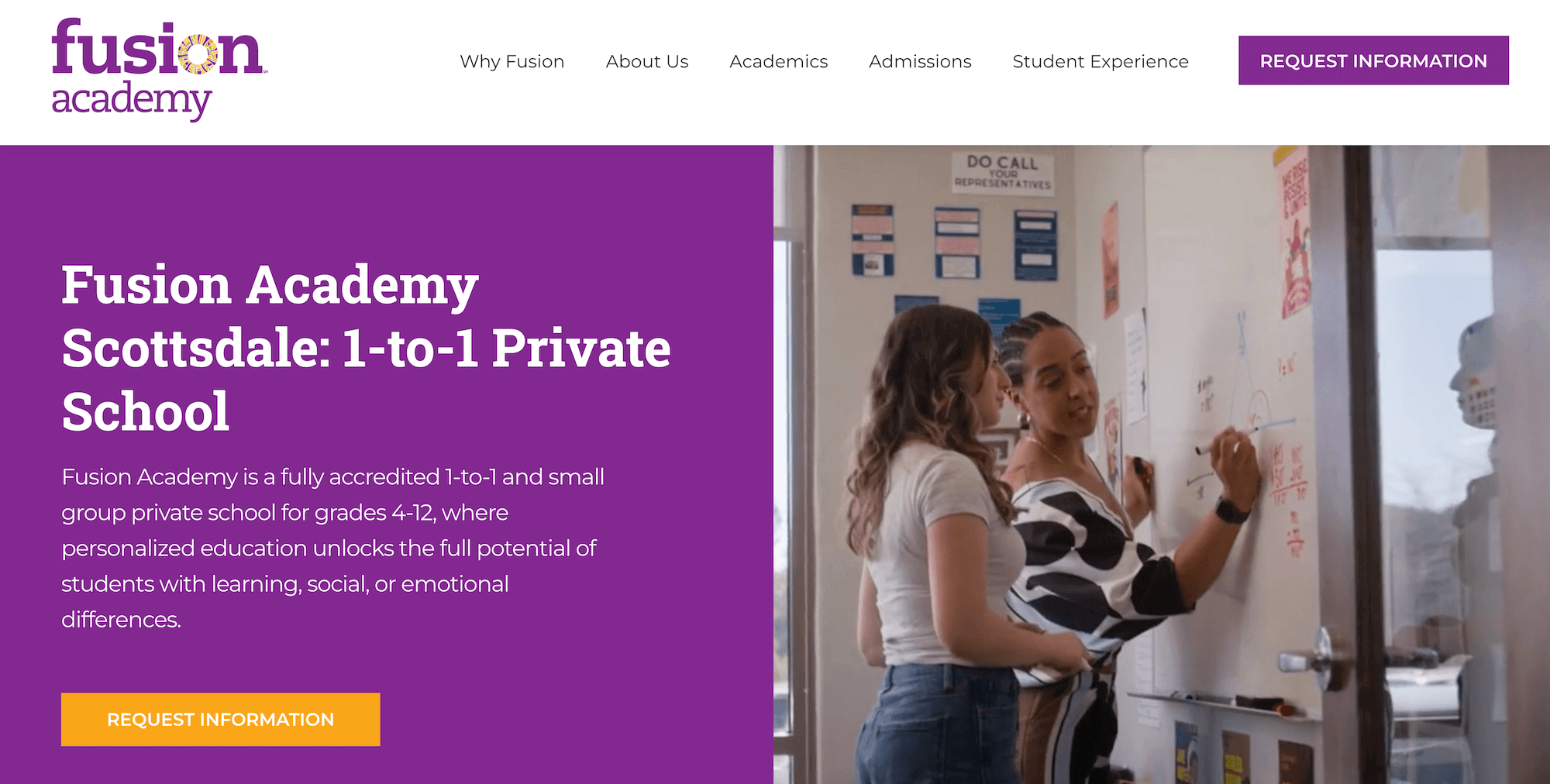
Fusion Academy is a fully accredited private school for grades 4–12 with campuses in Scottsdale and Gilbert, AZ. (We have over 80 campuses throughout the U.S., and you can get an up-to-date list of campus locations here.) Classes are offered in-person and online, with some students doing a hybrid of both.
We offer a one-to-one learning model and a small, tight-knit community where students with autism can excel personally and academically. In our experience, this approach is ideal for students with high-functioning autism who haven’t found their place in a traditional school environment.
At Fusion Academy, students experience:
- A calm, welcoming teaching environment, where they can take their time to master concepts, ask questions, and learn without the sensory overload of a large classroom
- Personalized instruction, where teachers adjust the pacing of the lesson, integrate their students’ interests, and apply evidence-based, multisensory strategies
Because of our teaching model, we can adapt the standard middle school and high school curriculum to fit each student’s needs. This helps autistic students embrace their strengths, follow their interests, and bridge any gaps from their previous experience in school.
How Fusion Academy Customizes Learning for Students with Learning Differences
At Fusion, lessons are taught one-to-one or in very small groups, which allows teachers to give each student individualized attention and adapt the classroom to the student’s needs.
We strive to find the best approach for each and every student who attends a Fusion school. For students with autism, our flexible approach means our schools can accommodate:
- A student’s IEP (Individualized Education Program) or 504 Plan. Because of Fusion’s flexible scheduling, lesson pacing, and classroom setups, students can easily be given extra time for assessments, tackle complex topics in chunks, or use assistive technology in their learning.
- A student’s learning preferences. For example, if a language teacher knows their student tends to do better when they preview new vocabulary at the beginning of a lesson, they can change the order of the elements in their lesson plan. Or, if their math teacher notices they tend to prefer concrete examples to illustrate new concepts, they can prepare those in advance of their time with that student.
- A student’s sensory needs. Teachers can adjust the classroom environment to help students concentrate fully. For example, dimmed lights can reduce sensory stimulation.
- A student’s need for decompression time. Fusion’s scheduling is as personalized as the curriculum, and a child’s schedule can be adapted to help them learn as effectively as possible. If a student needs time to decompress after a demanding lesson, they can build a free period into their schedule. If they prefer to have all their classes later in the afternoon because they perform better as the day goes on, or if they would rather take all their classes over three days instead of five, this can also be accommodated.
Fusion’s personalization process starts during admissions and enrollment.
We arrange interviews with all prospective students and their families to find out more about a child’s needs, interests, goals, and previous school experience. During the admissions process, we might also ask a student to take a MAP test, which assesses their academic skills in language usage, mathematics, and reading, helping us choose the best resources and pathway for their level.
With the results of these tests and interviews, we can begin to personalize the student’s learning plan and schedule so they can feel as comfortable as possible, as soon as possible, once their classes begin.

Our teaching model is also designed so that teachers can develop strong mentoring relationships with their students. We know that many autistic students, for example, benefit from more support around their executive function, providing instruction in the skills they need to improve in order to learn more effectively.
Our teachers can help with this by teaching skills like organizing a study calendar, taking notes in a way that helps their brain process and retain information, and regulating their emotions during challenging moments like assessments or working with a new teacher. As mentors, our teachers can help students understand how autism affects their learning and show them how to work with it rather than forcing themselves into methods that simply don’t fit.
We’ve found that this learning model and our focus on social emotional learning work particularly well for students with learning differences like autism, students with anxiety about school, students who thrive in an accelerated program, and twice-exceptional students.
The data shows that our students leave Fusion well prepared for life after high school. For example, from the class of 2025:
- 99% of applicants were accepted into a 4-year college
- 87.5% attended their first-choice school
- 51% received merit scholarships averaging $58,303
Now let’s look more closely at how campus life at Fusion builds community and supports this complete school experience.
Campus Life for Neurodiverse Students at Fusion
As well as academic results, Fusion’s campuses are committed to fostering meaningful connections between the students in our community.
Fusion campuses are small, typically topping out at around 100 students. As of right now, our Gilbert campus has 71 full-time students, and our Scottsdale campus has 109 full-time students.
This creates a close-knit community where students can find their place more easily than in a busy traditional school.
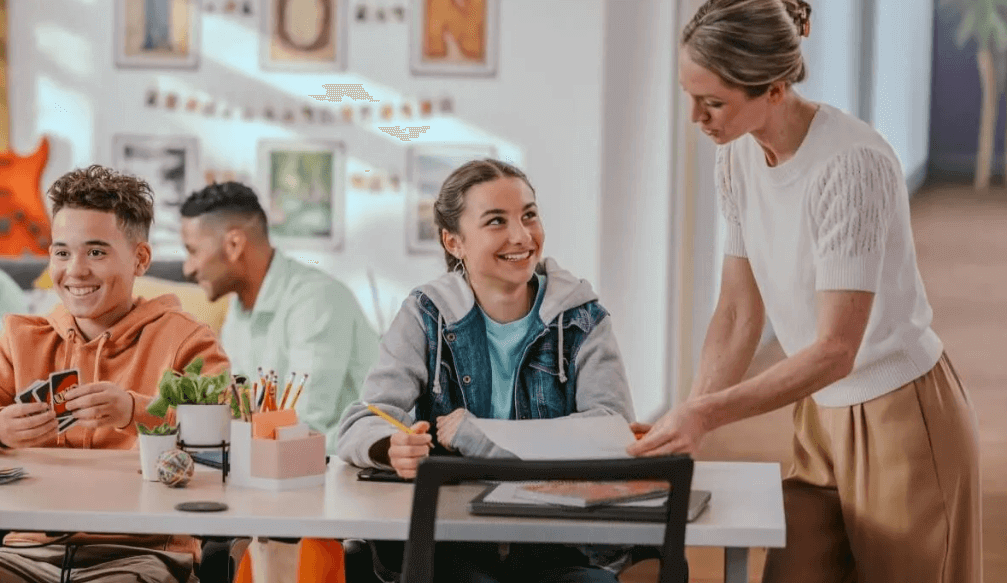
At Fusion, campus life is built around:
- The Homework Cafés: Every Fusion student has a scheduled time in the Quiet Homework Café, a calm space on campus where they can complete their assignments and receive additional help from teachers. They can also visit the Social Homework Café, a lively space where they can eat lunch, meet up with other students, and where a teacher is on hand to help them connect with like-minded peers.
- Student clubs: The clubs we offer vary by campus, but there’s always an opportunity for students to explore their interests and take on leadership and organizational roles when they’re ready. Currently, the Scottsdale campus runs clubs for improv, board games, music, video games, and D&D.
- Social events: Our campuses hold social meetups throughout the year. For example, at a recent holiday party in Arizona, students made snowglobes, built gingerbread houses, and played games to celebrate the last days of school before the winter vacation.
- Field trips: We work hard to create a well-rounded school experience for our students, and that includes learning outside the classroom. Fusion students in Arizona have recently been to the ballpark to watch spring training and visited the interactive Wonderspaces art exhibition in Scottsdale.
- Community service and volunteering. The Community Action Program (CAP) at Fusion is part of our school-wide learner outcomes and aims to help students become compassionate, engaged members of their wider community. To put this into action, our students in Scottsdale recently partnered with the Foster Alliance to collect donations for a holiday toy drive.
What’s more, the Fusion community extends to students’ families. As students take advantage of all these opportunities, parents are kept well informed about how their children are doing in school.
Every day, teachers send parents feedback by email, explaining, for example, the material covered in class, the topics that sparked a student’s interest, and how their general mood changed before and after the lesson. For many parents with neurodivergent students, these updates are an important insight not just into their child’s academic performance, but how they’re handling the demands of their education.
Academic Programs at Fusion Academy
Fusion Academy’s campuses in Arizona offer:
- Full-time programs for middle school and high school students, with a wide range of classes and course types, including Honors and AP® courses
- Classes for credit, where students take individual classes instead of enrolling full-time. This is ideal for students who want to catch up, get ahead in a subject they excel in, or pursue their interests while remaining enrolled in their current school.
- Tutoring and mentoring, flexible options for students who need some additional support in specific areas or to build their confidence.
To learn more about Fusion Academy, you can:
- Request more information from the Scottsdale or Gilbert campus. You can also see the location of each campus in Arizona (and throughout the US) here.
- Read and watch testimonials from our school community. These student and parent stories feature students with learning differences who talk about finding their place, gaining confidence, and overcoming challenges at Fusion.
2. The Autism Academy for Education & Development
The Autism Academy for Education and Development is an autism-only private day school with six locations in Arizona: Gilbert, Tempe, Glendale, North Phoenix, and Tucson.
The school was founded in 2013 and serves students on all levels of the autism spectrum with a full K–12 curriculum and a B.R.I.D.G.E. program (Building Real-World-Independence and Developing a Game-plan for Employment, Education, and Empowerment). This program serves students after 12th grade as they transition from high school to adulthood.
Alongside individualized teaching and a range of accommodations for students with autism, the AAED offers a range of related services like animal therapy, behavioral support, and speech and occupational therapy.
3. Arizona Autism Charter Schools
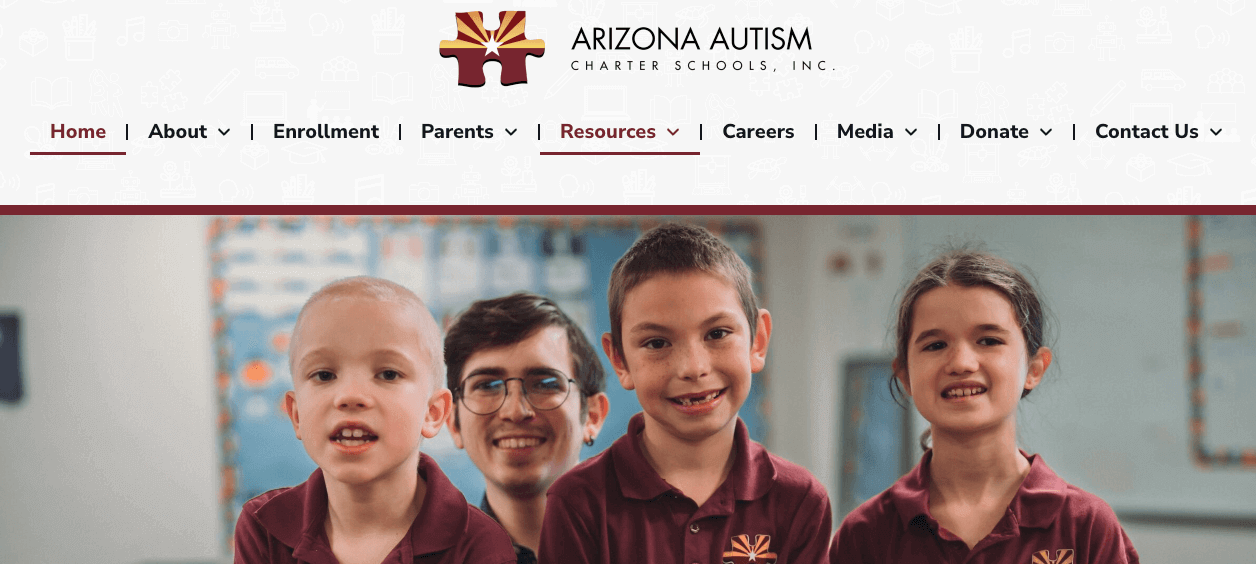
The Arizona Autism Charter Schools is a specialist school that offers three types of programs to meet the needs of its students: The Academic Program for students at or near grade level, the Modified Academic Program for students who need modifications to the curriculum, and the Functional Academic Program for students with more intensive needs.
This school has four current locations, and each location serves different grades. For example, in Phoenix, the Early Learning Centre handles K–3, and the main campus handles grades 4–12. Other locations are open in the West Valley and Tucson, with an East Valley elementary school opening soon.
AZACS offers a range of special classes, such as music therapy, arts, physical education, and dance, and some campuses have a focus on STEAM and project-based learning through the Woz ED curriculum.
4. Gateway Academy
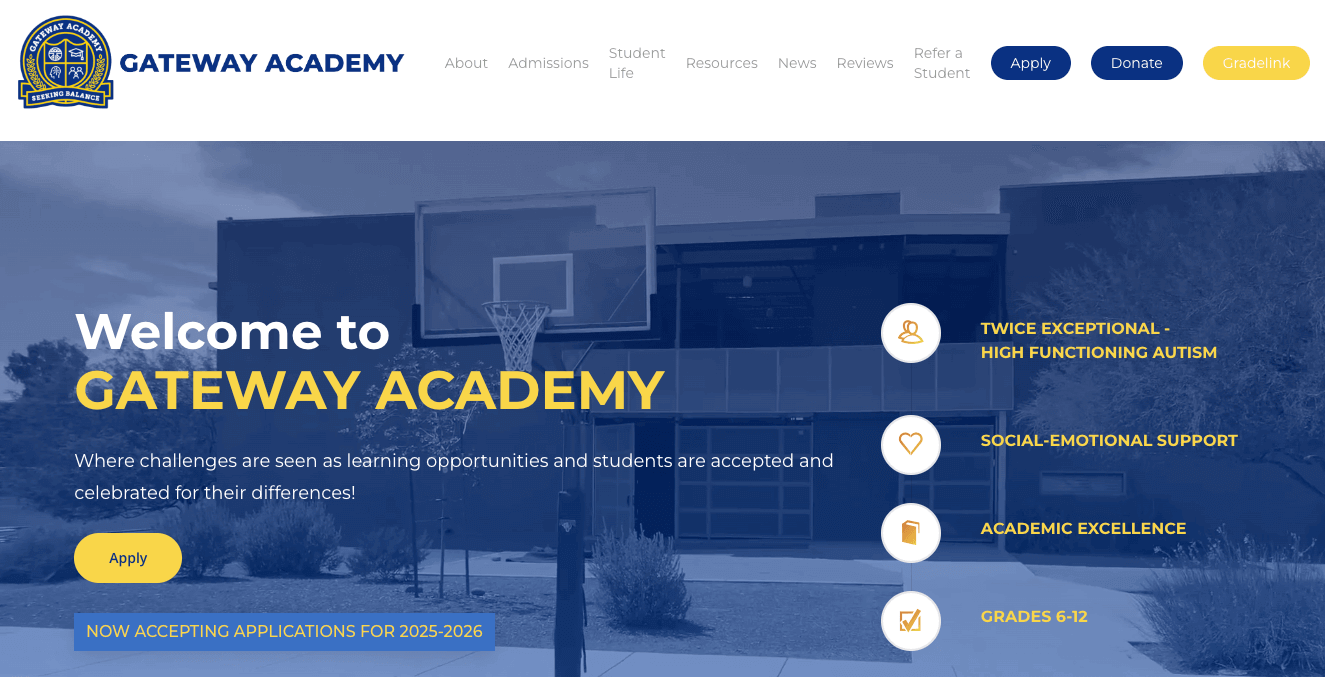
Based in Scottsdale, the Gateway Academy is a private day school for grades 6–12. This school caters to twice-exceptional students with high-functioning autism, and as such, offers a structured but adaptable program designed to help students feel understood, supported, and empowered.
Gateway places a strong emphasis on academic achievement and has a range of clubs and electives to build a strong foundation for later life. This includes an extensive physical and mental well-being program, a school horticulture garden, music, and equine therapy.
Admissions standards focus on students who are academically capable with a diagnosis of high-functioning autism, who have a discrepancy between IQ and achievement in standardized assessments, and who struggle with large classroom settings.
5. ReThink Microschool
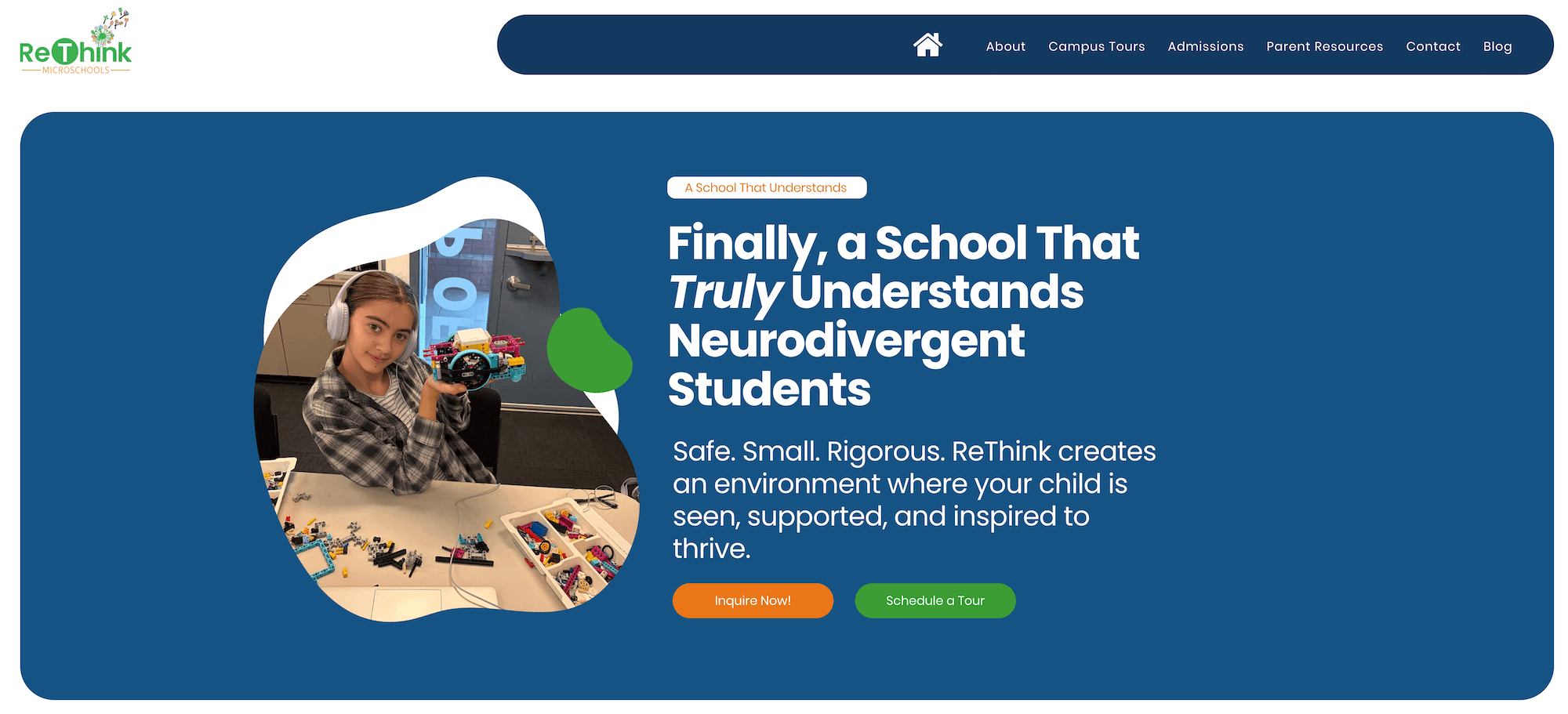
ReThink Microschool is a small, safe, rigorous school for neurodivergent students in Arizona. The school is based in Gilbert and serves grades 5–12. Classes are held in groups of up to eight, and the school offers integrated speech-language pathology alongside the standard curriculum.
The microschool concept aims to bring the individualized attention and closeness of homeschooling together with the structure of traditional schooling. At ReThink, the curriculum is designed to be student-centred and inquiry-based. In very small classes, teachers can meet learners where they are and focus on empowering students while building confidence and real-world skills.
ReThink also partners with Arizona State University so high school students can earn college credit before they graduate, which can open doors to further education and future careers.
Next Steps
If you’re interested in learning more about Fusion Academy’s personalized approach and how one-to-one teaching could benefit your autistic child, we encourage you to:
- Schedule a tour of our Gilbert or Scottsdale campuses to experience Fusion Academy in person.
- Learn about our admissions process and how we develop an individualized curriculum for students with learning differences.
- Learn about using ESA funds to help pay for Fusion. Fusion Academy is an ESA-approved school, meaning Arizona ESA funds can be put toward the cost of tuition.