



Students with autism can be deeply focused, motivated, and knowledgeable about the classes they care about. But traditional school environments aren’t always built to let those qualities shine. When the school model forces them into large classes, rigid schedules, and a curriculum designed for the average neurotypical student, it can often result in anxiety, sensory overwhelm, and social pressure, which can make school a tough place to be.
This guide covers several types of schools that can offer an alternative for students with autism, including:
- Private schools that accommodate neurodiverse learners
- Schools for students with learning differences
- Therapeutic and specialized autism schools
Later, we’ll look at options across all of Virginia. However, it is important to note that specialized schools tend to cluster around the state’s larger metro areas:
- Northern Virginia (Alexandria, Arlington, Fairfax, Loudoun County)
- Richmond
- Hampton Roads (Virginia Beach, Norfolk, Chesapeake)
Families in smaller or more rural communities — including parts of the Shenandoah Valley, Southside, and Southwest Virginia — may have fewer specialized autism schools nearby. For these families, virtual schooling may be a strong option, so we’ll also cover an online program well suited for many students with autism.
In this guide, we include our own school, Fusion Academy, a fully accredited private school for grades 4–12 with four campuses in Virginia: Alexandria, Loudoun, Tysons, and Reston. Classes at Fusion are taught one-to-one or in small groups of 2–5 students, and our student body is deliberately small, so we can build our approach around each student and adapt our approach to their needs. For families elsewhere in the state, Fusion Global Academy offers the same personalized model through a fully online program with a thriving virtual community.
Narrowing Down Your Search: Understanding Your Child’s Support Needs
Every child with autism has a different profile, and no two children, even with the same diagnosis, will have identical needs. Autism, sometimes called autism spectrum disorder or ASD, affects communication, sensory processing, social interaction, and executive function differently in each child, and the way it shows up can also change depending on the environment, the day, or even the time of day.
Dr. Damon Korb, a developmental pediatrician and guest on Fusion’s Learning Differently podcast, explains that autism isn’t a fixed set of behaviors so much as a difference in how the brain is wired. As he put it:
“The term we use is ‘Autism Spectrum Disorder,’ and knowing it’s a spectrum is really important… There’s a whole range of abilities… all occur in varying degrees in each child.”
Because of that range, one useful starting point for narrowing your school search is asking whether your child has low or high support needs.
Students with low support needs typically work at or near grade level academically, but benefit from intentional, targeted help in specific areas like socialization, adapting to unexpected change, and building their planning and organization skills.
Day to day, this might look like a student who can follow what their teachers are saying without trouble but struggles to contribute ideas to a group project or discussion. Others might be confident in holding a conversation, but find it hard to read social cues that show when another child has lost interest, for example.
These students often “mask,” consciously suppressing or adjusting their natural responses to get through the social and sensory demands of a traditional classroom. Masking takes real effort to sustain, and it often leaves a student exhausted or irritable by the time they get home, even if the school day looked fine on the surface.
Students with high support needs usually benefit from more day-to-day support in school and at home, including help with communication, sensory regulation, and navigating the routines and transitions that make up a typical school day.
In schools, this might look like a student who needs visual schedules to move between activities, who becomes overwhelmed by a noisy hallway or a fire drill, or who has a speech or language impairment that means they communicate primarily through an assistive device. Some students with high support needs also have multiple disabilities that mean they need additional support with independent living skills throughout the day.
It’s also important to note that autism doesn’t usually show up on its own.
Many students with autism are also navigating co-occurring conditions like ADHD or dyspraxia, and around 40% of children with autism also experience anxiety.
Each additional condition adds another layer to a child’s social, emotional, sensory, and educational needs, which is part of why finding the right school is so important.
So, whether you’re comparing school options for a young autistic child, or looking to switch schools because your child’s current environment just isn’t working for them, it’s worth talking through your child’s profile with their current teacher and any therapists or experts who know them well.
With that lens, let’s take a closer look at schools for students with a range of support needs, starting with our in-person and online school, Fusion Academy.
Fusion Academy: Personalized Private School for Students with Autism with Low Support Needs in Virginia

Fusion Academy is a fully accredited private school for grades 4–12, with four in-person campuses in Virginia: Alexandria, Loudoun, Tysons, and Reston.
At Fusion, classes are taught one-to-one or in groups of 2–5 students. What’s more, our student body is deliberately small, so students with autism can find their footing academically and socially without the sensory overload of a large traditional school.
Fusion can be a strong fit for students with autism who have low support needs — those who are academically capable but benefit from more flexible teaching methods, adjusted pacing, and stronger social and emotional support than a traditional school typically offers.
There are many ways to enroll at Fusion, including:
- Full-time programs for students who want a complete upper-elementary, middle, or high school education
- Classes for credit for students who want to make up credits or get ahead in a subject they’re passionate about while staying enrolled elsewhere
- Tutoring and mentoring for students who need more targeted, lower-commitment support
- Hybrid scheduling, allowing students to split time between in-person and online learning
For families who aren’t near one of our Virginia campuses, or who prefer to learn from home, Fusion Global Academy offers the same one-to-one, personalized model fully online, with the same range of full-time classes for credit and tutoring options.
You can contact us to learn more about a specific campus in Virginia or about our online school, or you can keep reading to learn more about how Fusion helps educate and empower students with autism.
How Fusion Builds an Individualized Program for Students with Autism
Personalization at Fusion starts before a student’s first day.
During enrollment, we meet with every prospective student and their family to talk through their learning needs, sensory sensitivities, previous school experiences, and goals. For students with autism, this is a chance to talk through what has and hasn’t worked before, so we can think through how Fusion’s model might fit their specific profile. If a student has an IEP or 504 plan already in place, we can also discuss how it might be possible to meet the recommendations in that plan.
We may also ask students to complete a MAP® assessment, which measures academic skills in reading, math, and language, alongside a MindPrint cognitive assessment, which helps us understand how a student approaches problem-solving and can surface executive function strategies to best support the student.
We use the information from these initial tests and conversations to come up with an individualized curriculum and learning plan for each student. For students with autism, this can shape many different aspects of their school experience, including:
- The pacing across subjects. Many students with autism have an uneven academic profile, ahead of grade level in some areas and needing more support in others. Students can mix course levels, taking Honors or AP® classes where they excel and Essential courses where they need more support, and can start new material as soon as they’re ready rather than waiting for a new semester.
- The sensory accommodations used in the classroom. Because classes are one-to-one or taught in small groups, teachers can adjust the sensory environment around a specific student: dimming the lights, offering flexible seating, or arranging the room so teacher and student sit side by side instead of face to face. Teachers also have the flexibility to build in short breaks between or during classes so teachers can move or decompress.
- Lessons connected to student interests. Teachers integrate a student’s specific interests into lessons to support engagement, whether that’s marine biology, a favorite video game, mechanics or engineering, or a hobby like crochet. We find that using what a student already cares about can help a difficult concept click, so many Fusion teachers use high-quality AI education tools to generate personalized assignments and quizzes that frame new concepts in a way the student finds easier to connect with.
- Executive function coaching. Many students with autism also navigate challenges with organization, time management, and task initiation, especially if they also have ADHD. Teachers work directly with students on these skills as part of everyday coaching, in a way that works with how their brain processes information.
- Flexible scheduling. Fusion’s campuses in Virginia are open from 7:30 AM to 7:30 PM, Monday through Friday, so families can lengthen the school day for more downtime between classes, or compress the week to three or four days so a student can study at home or attend therapy appointments without missing lessons.
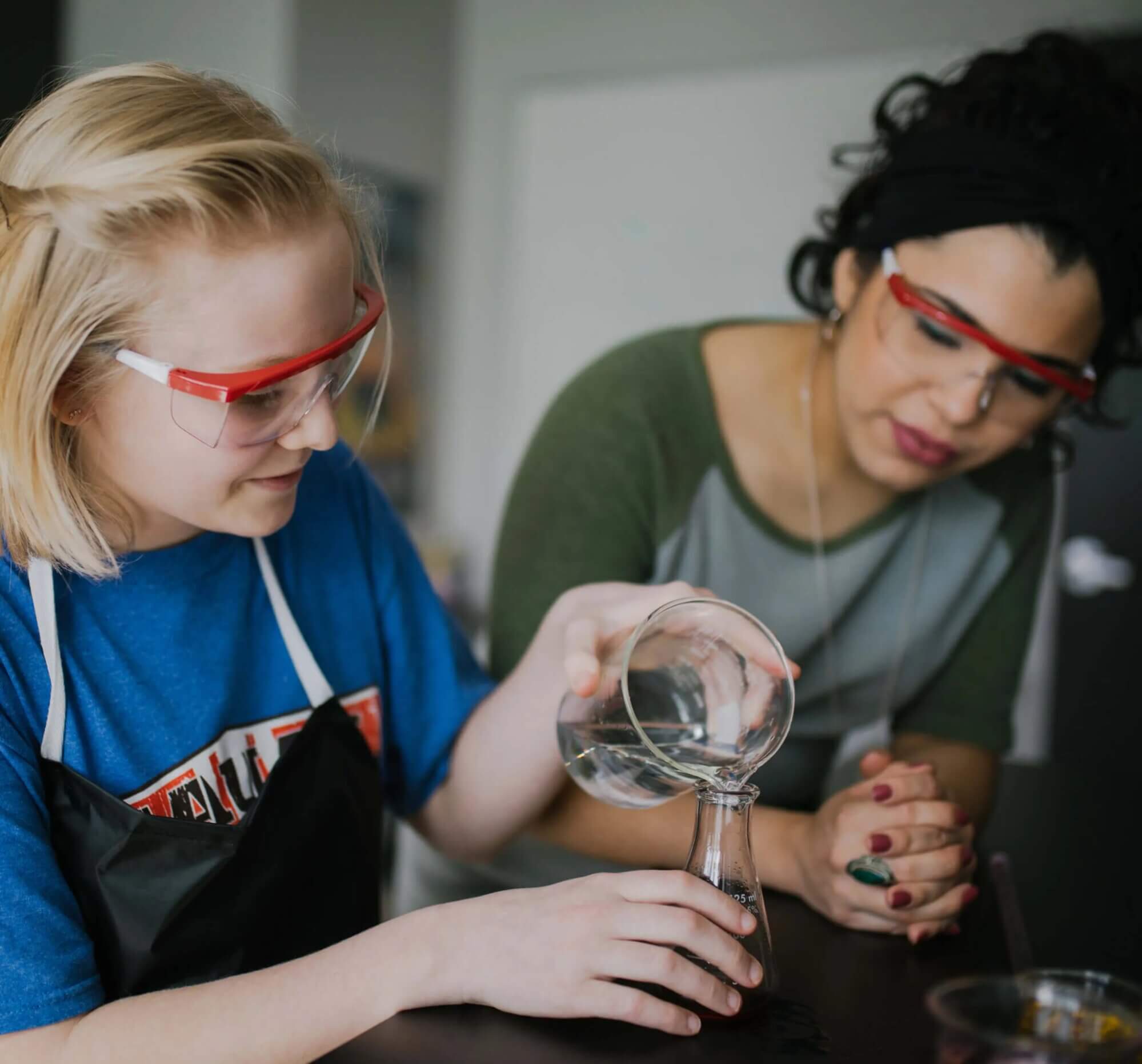
Viraj, a nonspeaking student with autism, is one example of what this model can make possible.
Previous schools steered Viraj away from academic work because of his communication challenges, but after finding the right assistive communication device, he was able to engage with complex material and express sophisticated ideas at Fusion. Teachers built lesson plans matched to his intellectual ability, and he was later accepted into MIT. (Read more of his story here.)
Campus Life and Social-Emotional Learning
For students with autism, navigating the school day can take more than academic support. Reading social cues, managing sensory input, and regulating emotions are skills many students are actively building, and a school that treats these as part of the curriculum can change how a student experiences their education.
Social-emotional learning at Fusion is built into the rhythm of campus life.
In our one-to-one and small group classes, teachers have the capacity to check in with students session by session, supporting self-awareness and decision-making as it comes up naturally. Students also have a Lead Mentor, who can run dedicated one-to-one sessions on communication, emotional regulation, and decision-making, separate from academic classes.
Students can also take Community Minds, a course where they work individually with a social coach on reading social cues, navigating tricky situations, and building friendships. This provides space to work on social skills directly and explicitly, rather than expecting them to develop through observation alone.
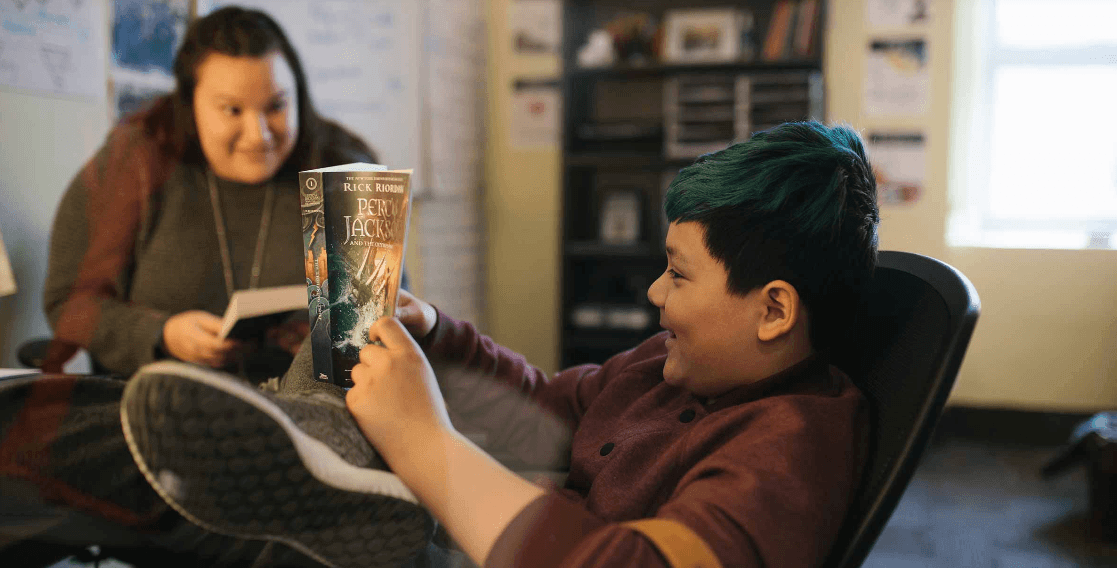
Outside of the classroom, that same focus on social-emotional development shows up in a few key places in terms of Fusion campus life:
- The Homework Café, which is typically split into a Quiet space for focused work and a Social space for low-pressure connection with peers, so students can choose whichever fits how they’re feeling that day.
- Student-led clubs, shaped by student interests, give students a low-pressure way to connect with like-minded peers and build the same social skills they’re working on in class. Students at Fusion Academy Tysons, for example, can choose between Art Club, Snack Club, Games Club, Video Game Tournament Club, D&D Club, Improv Club, Film Club, Scrapbook Club, Car Club, and Book Club during the 2026/27 academic year.
- The Community Action Program, where students take part in volunteering and service, building collaboration and a sense of belonging outside a typical classroom setting.
- Campus events focused on social-emotional and wellness themes. For example, Fusion Academy Alexandria has hosted workshops on mental health in partnership with Bloom Health Centers for students in grades 6–12.
For families enrolled at Fusion Global Academy, the same structure exists online: the Global Homework Café offers the same quiet and social support virtually, and our Student Life programming gives students their own clubs, events, and ways to connect with peers.
Planning Life After High School
College prep can feel like a long way off for families who are just starting to look at schools, but it’s worth factoring in early. The academic habits, self-advocacy skills, and support structures a school offers now shape how prepared a student with autism feels when that transition eventually arrives.
At Fusion, post-secondary counseling supports students with college applications, scholarship searches, and planning for life after graduation, and counselors are familiar with university programs built specifically for neurodivergent students, alongside standard college pathways.
For students with autism, post-secondary counseling can help them feel much more confident as they consider their options, because it helps them understand which schools have structured support programs, accessible disability services, or smaller class sizes that carry the same benefits a student found at Fusion into their next environment.
Not every student is interested in a four-year college path, and Fusion’s post-secondary counseling reflects that, too. Students considering a gap year, vocational training, or another path can also access support, built around their interests and needs.
Fusion’s Virginia Campus Locations
Fusion Academy has four campuses across Northern Virginia, each offering the same one-to-one and small group model described throughout this guide. Reach out to your nearest campus to learn more or schedule a tour.
333 John Carlyle Street
Suite 100
Alexandria, VA 22314
Phone: 703-535-3130
Located in the Carlyle neighborhood of Alexandria, Fusion Alexandria holds regular open houses for families who want to see the model in person.
The school has also been nominated for Arlington Magazine’s Best of Arlington awards in the category Best Private School for Non-Traditional Learners.
19300 Promenade Dr.
Suite 200
Leesburg, VA 20176
Phone: 571-252-7007
Based in Leesburg, this campus serves families across Loudoun County. With Nancy Knor, special education lead, author, and speaker, the students at Fusion Loudoun recently wrote and published their own book.
Check out The Dyslexic Fiddler Crab: A Survival Guide for Students.
11700 Plaza America Drive
Suite 150
Reston, VA 20190
Phone: 703-988-6377
Located in the Plaza America area of Reston, this campus offers the same full range of full-time, classes for credit, and tutoring and mentoring options as Fusion’s other Virginia campuses.
Fusion Reston is a particularly musical campus, holding open mics, Fusion’s Got Talent events, and more. The student band States of Matter recently performed at the school’s spring showcase.
1934 Old Gallows Road
Suite 200
Vienna, VA 22182
Phone: 703-448-0350
Fusion Tysons is centrally located and, like our other campuses, runs regular open houses.
Christen Dixon, the Director of Education at Fusion Tysons, was recently nominated for the Autism Advocacy Service Award, run by the Autism Society of Northern Virginia. We’re honored to see her dedication to Fusion’s students and community being recognized.
For families who aren’t within traveling distance of one of Fusion’s Virginia campuses, Fusion Global Academy offers the same personalized, one-to-one model fully online. Students can pick up individual classes for credit, tutoring, or a full-time enrollment, all without needing to live near a physical campus.
Choosing a school for an autistic child isn’t a single decision made once and settled. It’s something that shifts as your child grows, as their needs change, and as you learn more about what actually helps them. Fusion’s role in that isn’t limited to academics. It extends to supporting who a student is becoming, socially and emotionally, as much as what they’re learning in the classroom.
If you’d like to go deeper on any of the topics covered in this guide, these resources may help:
- The Learning Differently podcast, where experts and specialists discuss autism, anxiety, executive function, and other topics relevant to neurodivergent students and their families.
- Our article on How to Help a Child with Anxiety About School, for families navigating school refusal or school-related anxiety, which can show up alongside autism regardless of a student’s support needs
- More information on tutoring for students with ADHD or dyslexia.
- Schools for Neurodivergent Students, which looks more broadly at how co-occurring conditions like ADHD, dyslexia, and anxiety shape what a student needs from a school.
If you’re ready to talk through your child’s specific situation, our Virginia campuses and Fusion Global Academy team are here to listen and help you figure out the right next step, whether that’s a full-time enrollment, a single class, or just an initial conversation about what’s not working right now.
Schools for Autism in Virginia by Region
Northern Virginia
Matthew’s Center
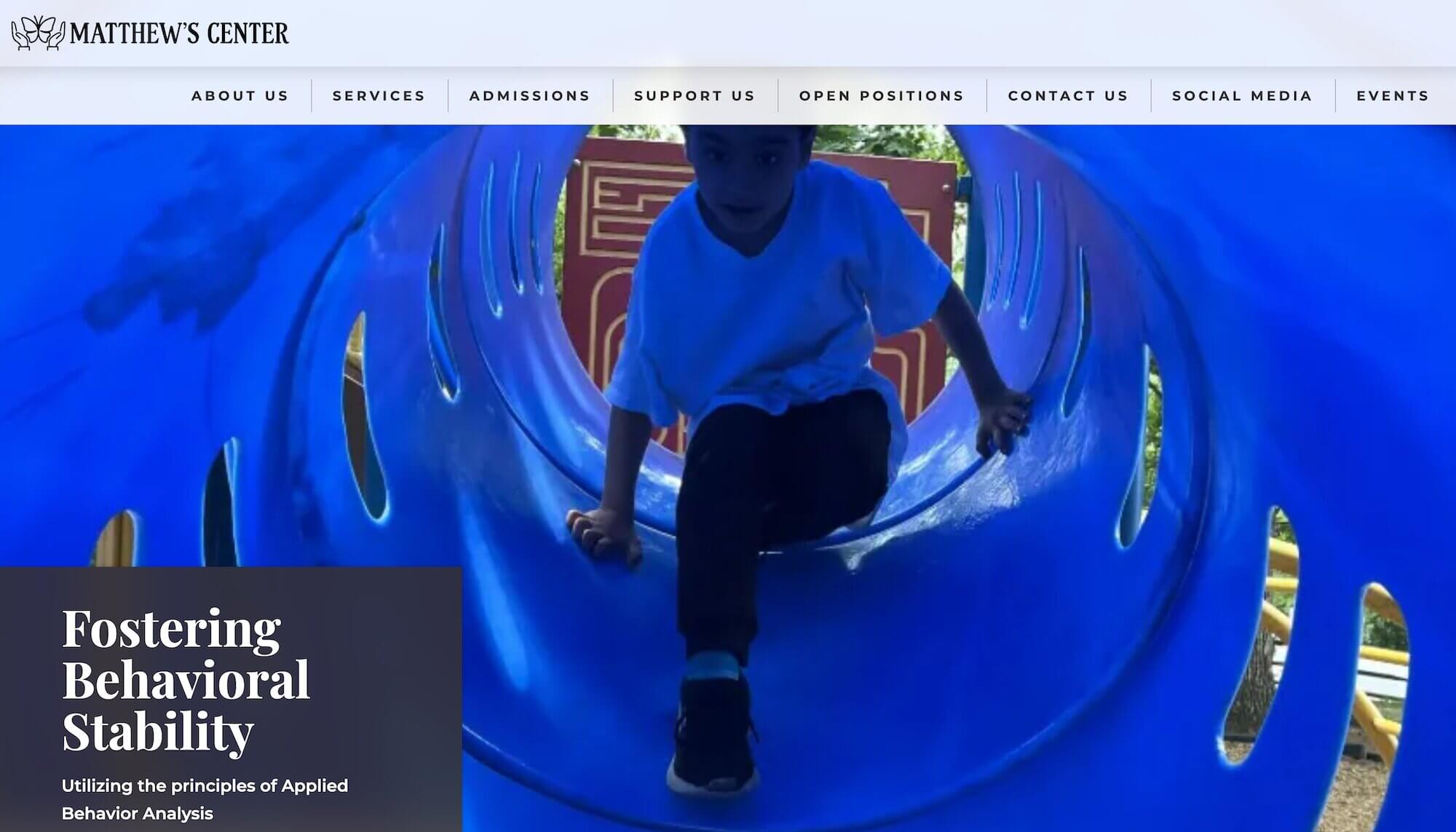
Matthew’s Center is a private special education day school in Manassas, licensed by the Virginia Department of Education, serving students ages 5–22 with autism, intellectual disability, developmental delay, and other conditions.
The school was founded in 2000 by parents of a child with autism and has grown from two students to over 30, with services built around Applied Behavior Analysis (ABA) delivered by Board Certified Behavior Analysts and Registered Behavior Technicians. It’s best suited to students with high support needs who benefit from individualized behavioral support alongside academics.
- Address: 10651 Lomond Dr, Manassas, VA 20109
- Phone: 703-369-2976
The Sycamore School
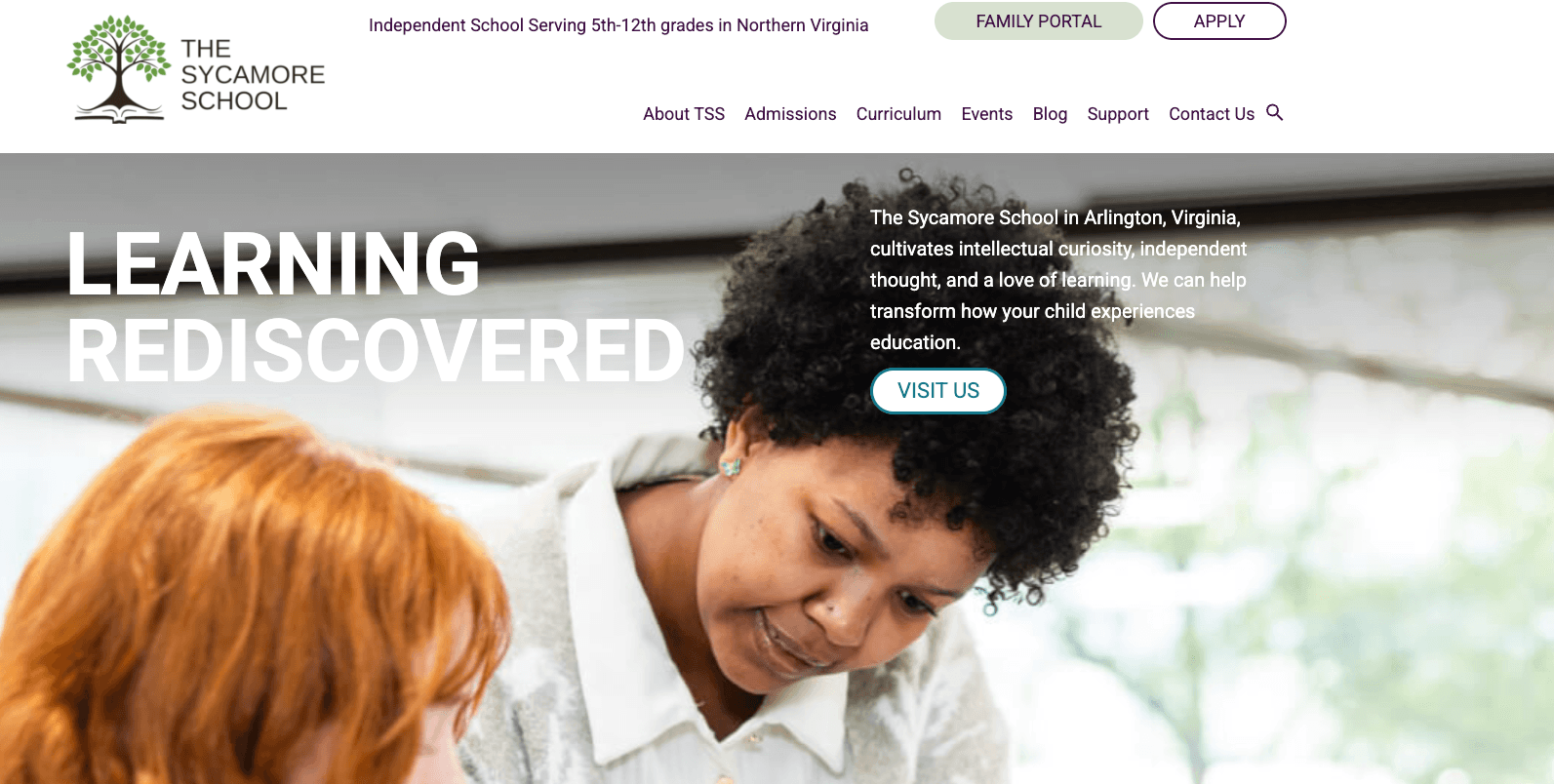
The Sycamore School is a small independent school in Arlington serving grades 5–12, with 42 students and a 6:1 student-teacher ratio. It’s designed for students with a specific learning disability, anxiety, ADHD, or low-support needs autism, though it’s not exclusively an autism school. TSS follows a mastery-based learning model organized around three areas: academic development, social-emotional growth, and civic engagement.
Rather than grades or tests, TSS uses ongoing feedback and reflection to track student progress, letting students move through material at their own pace instead of a fixed timeline. The school is accredited by Cognia and holds an annual Professional Open House focused on supporting twice-exceptional (2e) learners, reflecting a particular focus on students who are both gifted and neurodivergent.
- Address: 1550 Wilson Blvd, Suite 300, Arlington, VA 22209
- Phone: 703-717-5360
Richmond
The Faison Center
The Faison Center operates a specialty day school in Richmond serving students aged 5–22 whose autism-related needs are too complex for public school settings. The school is broken into three age-based programs: Lower School (5–11), Middle School (11–14), and Upper School (14–22), plus a Life Skills and Employment Academy for older students focused on functional and vocational skills.
Faison was founded in 1999 by the family of Brittany Faison, who was diagnosed with autism as a toddler, after her grandparents wanted other families to have access to the same effective, ABA-based techniques that helped her. The center now serves individuals across the lifespan model, from an Early Education Center through adult residential services, making it one of the more comprehensive autism-specific service continuums in the state.
- Address: 5311 Markel Road, Richmond, VA 23230
- Phone: 804-612-1947
Northstar Academy
Northstar Academy serves students in grades K–12 in Glen Allen with a wide range of disabilities, including autism, which makes up 42% of its student population. The school uses differentiated instruction and project-based learning in small classes.
What sets Northstar apart is its Career Center, offering hands-on training in areas like business technology, construction and maintenance, hospitality, materials handling, and veterinary assisting. Students work alongside peers with different strengths and challenges, which the school frames as a deliberate choice. Their philosophy is that contact with a range of abilities helps natural leaders emerge and pushes students outside their comfort zones.
- Address: 11501 Nuckols Road, Glen Allen, VA 23059
- Phone: 804-747-1003
Hampton Roads
Rivermont Schools, Tidewater
Rivermont School’s Tidewater campus is located in Virginia Beach and serves students in grades K–12 with autism and emotional disabilities. As part of the larger Rivermont Schools network (17 campuses across Virginia), the Tidewater location integrates evidence-based practices, counseling, and a trauma-informed approach directly into its academic program, rather than treating therapy as a separate add-on.
Most Rivermont students are referred through their public school district as part of an IEP placement, and the goal is to help students build the skills to return to their home district when they’re ready. This makes Rivermont a strong option for families working within the public special education system who need a more intensive, therapeutic environment than their zoned school can offer.
- Address: 240 Clearfield Avenue, Suite 300B, Virginia Beach, VA 23462
- Phone: 757-497-4703
Chesapeake Bay Academy
Chesapeake Bay Academy is a private school in Virginia Beach for grades 1–12 serving students with learning differences, including ADHD, dyslexia, dysgraphia, and autism. The school uses small class sizes, individualized instruction plans, and a multisensory, project-based curriculum, and is accredited by the Virginia Association of Independent Schools (VAIS).
Beyond core academics, CBA offers a distinctive set of electives, including the MAKE CBA entrepreneurship and makerspace program, a food and consumer science lab, and an Advanced Scholars Institute for academically capable students.
- Address: 821 Baker Road, Virginia Beach, VA 23462
- Phone: 757-497-6200
Elsewhere in Virginia
VIA (James C. Hormel VIA Day School)
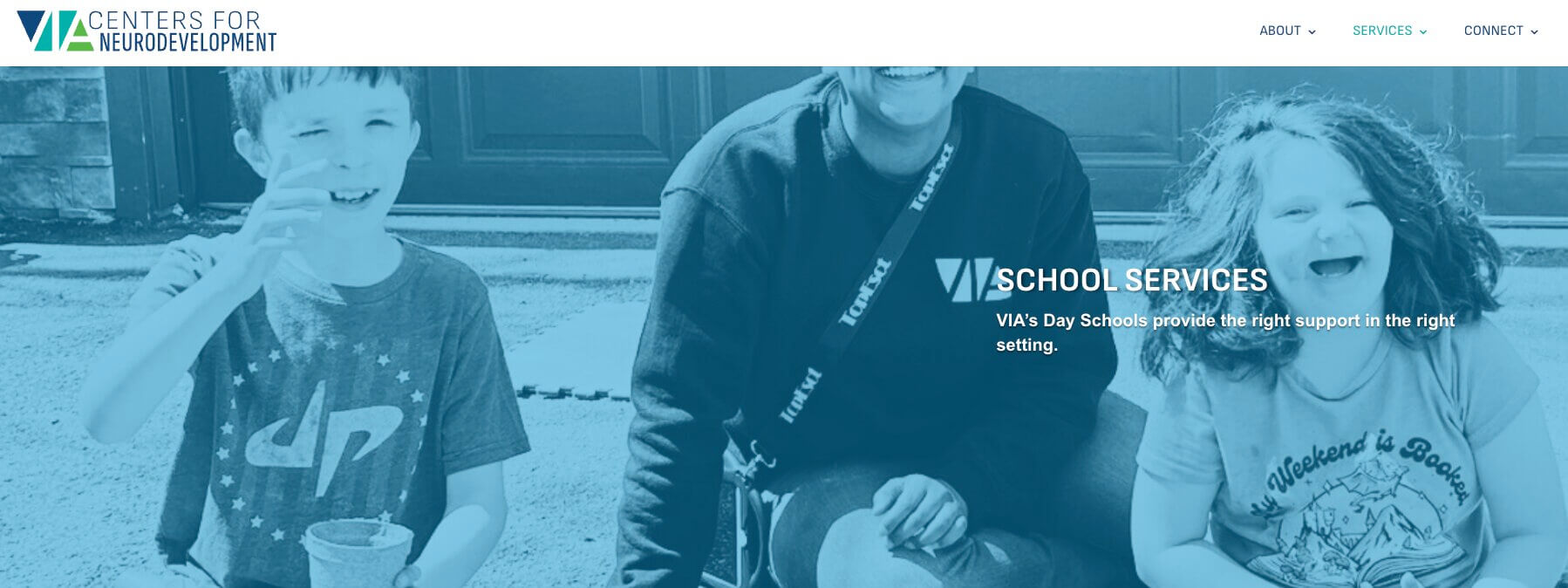
The James C. Hormel VIA Day School, part of VIA Centers for Neurodevelopment, operates campuses in Charlottesville, Roanoke, Lynchburg, and Lexington, making it one of the more geographically distributed autism-specific school options in the state for families outside Northern Virginia, Richmond, or Hampton Roads. The school offers two core programs: a Comprehensive ABA Program for students with high support needs, and the STARS Program, a structured, multi-sensory approach for students with a broader range of learning needs.
- Address: 1414 Westwood Road, Charlottesville, VA 22903
- Phone: 434-923-8252
Next Steps for Parents
As with any school choice decision, cost is a real consideration.
Placement and funding vary significantly from school to school. Some, like The Faison Center and Rivermont, primarily serve students referred through their public school district as part of an IEP placement, with costs covered by the district rather than paid directly by families. Others, like Fusion Academy, Chesapeake Bay Academy, and The Sycamore School, are private schools where families pay tuition directly, sometimes with financial aid available.
Virginia does have a tax credit scholarship program, the Education Improvement Scholarships Tax Credits Program (EISTCP), which can help offset private school costs for eligible low- and middle-income families.
It’s worth understanding upfront that this program works differently and is more limited than the Education Savings Account programs available in states like Arizona, Florida, and Texas. EISTCP relies on private donations to approved scholarship foundations rather than a direct state-funded account. Scholarship amounts are capped at what the state would have spent on that student’s public education, and the average scholarship value has historically been in the low thousands of dollars rather than covering full tuition.
Every child with autism is different, and so is every family’s situation.
What matters is finding the one that fits your child’s support needs, their profile, and what you’re hoping the school can help them achieve, whether that’s academic growth, social confidence, or simply a place where they feel understood.
If Fusion Academy sounds like a good fit for your child, whether that’s full-time enrollment, individual classes, or tutoring support, we encourage you to get in touch. You can:
- Request more information from your nearest Virginia campus
- Learn more about Fusion Global Academy if our online option would work better for your family
- Read student and parent testimonials from families who’ve been exactly where you are.

